Patricia Neal: In Her Own Words

That voice. That was the first thing I noticed about Patricia Neal when I was a child. I was at home watching television and she was in the John Wayne movie Operation Pacific. There was something in the timbre that stood out to me and I was riveted. To this day, she ranks as one of the few actresses whom I could listen to speak, say or read anything, including the phone book. I can’t remember much about the movie, but it definitely put Neal on my radar. Ms. Neal died two days ago from lung cancer at age 84, leaving behind a great legacy as both actress and advocate.

I’ve enjoyed her film work immensely: The Day the Earth Stood Still, Breakfast at Tiffany’s, The Hasty Heart and of course her Oscar winning turn as Alma in Hud. The latter is especially amazing to me – she is one of the few people to win a leading Oscar for a supporting role. (Awards are weird: she was nominated for the Golden Globe for Supporting Actress). Her career was curtailed by her well-publicized health troubles; a series of strokes in the early 60s which left her debilitated. Her husband, Roald Dahl, was greatly responsible for the rehabilitation she made. In 1968, she made a big screen comeback in the film adaptation of The Subject Was Roses, earning another Oscar nomination. I even remember her from television appearances, including an episode of Murder, She Wrote.

I never had the privilege of meeting the actress, but I was fortunate to see her in person on two close occasions. The first was at the 2006 Theatre World Awards, at which she presented to Jayne Houdyshell (who won for her brilliant turn in Well). Neal received a warm, spontaneous standing ovation that afternoon – the only one that afternoon. Houdyshell was moved to tears to be receiving the award from the legend; ultimately it was the highlight of the afternoon. The second time was that very weekend: I attended the dress rehearsal for the Tony Awards. Sitting up in the tiers at that barn Radio City Music Hall, there is a dry run (with fake winners selected) and a sense of great fun. Well, Neal rehearsed her presentation with Bill Irwin. That evening though, I was as surprised as everyone else when she was presented with a Tony award to replace the compact (original award) that was stolen from her the very first Tony night. Neal was the last surviving member of the first Tony Awards; winning the first-ever prize for Best Featured Actress for Another Part of the Forest.

Neal was interviewed by Rick McKay for his documentary Broadway: The Golden Age and he compiled this video montage of Neal discussing her career as a tribute. It focuses on her early career, and it is fascinating to hear her talk of how she got started in the business. After Another Part of the Forest she went to Hollywood, but returned to Broadway three times: a 1952 revival of The Children’s Hour, a shortlived comedy A Roomful of Roses and her last appearance: as Kate Keller in the original production of The Miracle Worker. Enjoy:

%CODE1%

Patricia Neway wins a Tony

Before the nationwide telecast of the Tony Awards, the awards used to be held in a hotel ballroom in the midtown area. Before Alexander Cohen turned it into the event it became, it was a simple affair and there were no performances. The ceremony was telecast locally in NY, and here is a quick sample of 1959’s winner for Best Featured Actress in a Musical, Patricia Neway, accepting for the original production of The Sound of Music, in which she played the Mother Abbess.

Included after the Tony footage is a photo montage of Neway set to a live recording of the act one finale of The Sound of Music from 1960 (For the neophytes: she sings “Climb Ev’ry Mountain” to dramatically bring down the curtain on act one). Enjoy:

%CODE1%

Tony’s Plate

The scrappy kids from [title of show] aren’t just preparing their next project, And Now This Is Happening, for an off-Broadway berth next spring, but they are also lending their support to a good cause.  Susan Blackwell, that slayer of proverbial vampires, and the gang are helping out her brother John who has created an online application called  Tony’s Plate. John’s son Tony was diagnosed with type 1 diabetes and his parents have to monitor his food/carb intake in order to measure the amount of insulin Tony needs. Well, John came up with Tony’s Plate, a nutritional calculator that makes it easier for the whole family to keep tabs on Tony’s needs.

Well, Apps for Healthy Kids, part of First Lady Michelle Obama’s “Let’s Move” fitness campaign, is currently having a challenge. As per the website:Apps for Healthy Kids challenges software developers, game designers, students, and other innovators to develop fun and engaging software tools and games that drive children, especially “tweens” (ages 9-12) – directly or through their parents – to eat better and be more physically active.”

Tony’s Plate is one of those currently in contention. If it wins, John will get to go to the White House and meet with Mrs. Obama. Pretty nifty, eh? Of course, the [tossers] made a video to support John in his efforts and it is as hilarious as one would hope it would be. Enjoy. And most importantly, you can vote by clicking here.

%CODE1%

Jerry Orbach’s Broadway

It’s hard to believe it, but it’s been almost six years since the world lost the great Jerry Orbach to cancer. His presence is still greatly felt, through TV reruns, frequent airings of Dirty Dancing on TV and he is fondly remembered by practically every person I know. Even though Orbach hadn’t been on Broadway since the mid-80s, he epitomized the essence of NY theatre for so many. You could see him at opening nights, presenting at the Tony Awards or even just riding the subway. While Law and Order gave him that household recognition, he was still just a New Yorker.

He got his start off-Broadway as a replacement in The Threepenny Opera and was the first El Gallo in The Fantasticks. The star also appeared in an acclaimed 1964 off-Broadway revival of The Cradle Will Rock. Broadway called in 1961 when Orbach was cast as the bitter puppeteer Paul in Carnival, with a score by Bob Merrill and direction by Gower Champion. It was a stage adaptation of the MGM hit Lili, about a naive French orphan who joins a seedy carnival where she becomes a star attraction with a Kukla, Fran and Ollie type connection to the puppets. The show was a big hit, earning a Tony for leading lady Anna Maria Alberghetti and running 719 performances. In this clip, from The Ed Sullivan Show, Alberghetti starts off with “Yes, My Heart” leading into Orbach’s stirring rendition of “Her Face”:

%CODE1%

Orbach received his first Tony nomination in 1965 for his well-received Sky Masterson in the limited run revival of Guys and Dolls at Lincoln Center. The following season he was back on the boards supporting Ethel Merman in the 20th anniversary revival of Annie Get Your Gun. But it was 1968’s Promises, Promises for which Orbach would win his Tony Award. A musical based on the 1960 hit The Apartment, the musical version updated the story to 1968 with contemporary costuming and sensibilities and was a mammoth hit, running three years. On the Tony telecast, before Donna McKechnie leveled the joint with “Turkey Lurkey Time,” Orbach performed his act one charmer “She Likes Basketball”:

%CODE2%

While Jerry always hit home runs in the musical department, he didn’t have as much success in plays. His first Broadway drama was The Natural Look which opened and closed on March 11, 1967 (and included Gene Hackman, Doris Roberts, Brenda Vaccaro and Andreas Voutsinas in the cast). He fared somewhat better with 6 Rms Wiv Vu in 1972 opposite Jane Alexander. Orbach returned to musicals in 1974 when he was signed on for Mack and Mabel. However, director Gower Champion abruptly replaced him with Robert Preston just before the start of rehearsals and no parties involved were ever given a clear reason why.

However, it was back to the top the following year when he created the role of the conniving lawyer Billy Flynn in Bob Fosse’s production of Chicago. Orbach held his own opposite leading ladies Gwen Verdon and Chita Rivera. The show was ahead of its time in terms of its cynical tone and was swept away by A Chorus Line during awards season (though the revival would prove far more timely). On the Tony telecast, Orbach represented the company with his first act number “All I Care About”:

%CODE3%

As it turned out, 42nd Street would be the final Broadway credit for both Jerry and director Gower Champion. The show, based on the 1933 film, was a juggernaut success, praised for being an old-fashioned throwback and run for 8 1/2 years. It’s opening at the Winter Garden in August 1980 is the stuff of legend, and it was Orbach (who was playing impresario Julian Marsh) who called for the curtain after producer David Merrick’s shocking announcement of Champion’s death earlier that same day. Orbach, who enjoyed long runs, stayed with 42nd Street for years until he proved too expensive for Merrick. On the Tonys, he led the company, including Wanda Richert and Lee Roy Reams with the second act showstopper “Lullaby of Broadway”:

%CODE4%

And for the road, here’s Jerry singing “Try to Remember” from The Fantasticks on the 1982 TV special “The Best of Broadway.”

%CODE5%

Bernadette Peters in “A Little Night Music”

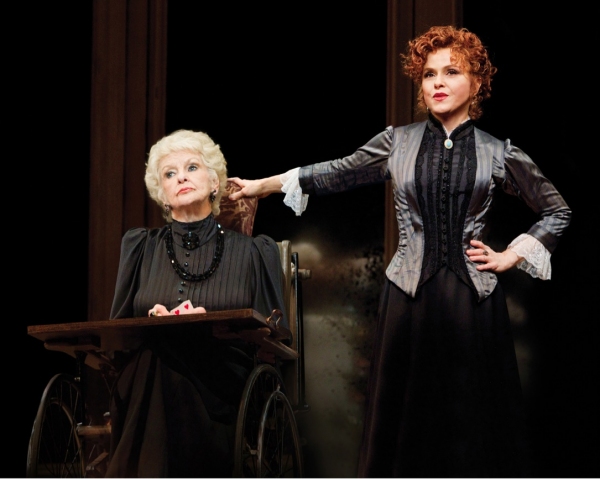
The summer nights in New York are now smiling broader than ever. A luminescent new star has taken the reins of A Little Night Music and has wholly revitalized what was once a lugubrious affair. The excitement among the theatre crowd has been considerably high since it was announced that Bernadette Peters and Elaine Stritch would be replacing Catherine Zeta-Jones and Angela Lansbury in the Broadway revival. Peters is giving the stage performance of a lifetime as the one and only Desiree Armfeldt, bringing the desperately needed Midas touch to a rather colorless staging. I all but hated the production when I attended its first preview (save for Lansbury, naturally), but with the addition of Peters, this Night Music is now a must-see.

Peters’ performance is a master class in poise, finding humor and humanity in her portrayal of the aging actress looking to settle down. But, not only is she bringing her A-game, but she is bringing out the best in those around her. Her relationship with Alexander Hanson’s Fredrik is loose, flirtatious and sexy and eminently more believable. With Peters running the show, you see why the men are drawn to her, but also understand her desperation to settle down with her family.  From an acting perspective I was impressed with the choices she was making – unexpected, original and wholly valid; not only is she likable, you want to stand and cheer for her by the finale. Everyone has that level of ease and for the first time it feels like a genuine ensemble onstage at the Walter Kerr. To say the production is better would be a colossal understatement; it’s like night and day. The change is especially apparent in the first act, which previously felt like Lutheran penance but is now a more breezy (if not brisk) farcical set-up. The knives were always there, but the whipped cream was lacking – it is now more balanced, more nuanced and more satisfying.

Then there’s “Send in the Clowns.” The delicate, intimate musical scene is one of the most anticipated in the entire canon. Not only was it the highlight of this revival, but it may be the greatest thing I’ve ever seen Bernadette Peters do – and that includes her superlative “Rose’s Turn” from the 2003 revival of Gypsy. Desiree and Fredrik sit on her bed as she makes the leap, risks everything for love only to have her dreams shattered right in front of her. Peters’ acting in the scene was truly remarkable. Between her beauty and nuance, it was impossible not to watch her as she listened, reacted and ultimately interrupted with Sondheim’s most famous song, tears streaming down her porcelain cheeks (and I might add, of most of the people around me). With Peters at the helm, the scene becomes the emotional apex of the show, as it should be (with Lansbury, it was “Liaisons”), a quiet showstopper that will continue to haunt you long after you’ve left the theatre.

Elaine Stritch has also joined the company, replacing Angela Lansbury in the role of Madame Armfeldt, Desiree’s  imperious mother and former courtesan. Stritch delivers her lines as well as her one major solo (“Liaisons”) with a brittle, no nonsense approach, delivering one liners with blunt honesty and the driest of wit. The actress doesn’t quite have all her lines, but she manages to make those moments work as though they were a genuine product of age. Understudy Bradley Dean was on for Aaron Lazar at the performance I attended and is even funnier and more in tune with the character than Lazar.

The rest of the company remains the same yet they’ve all made vast improvements, over the course of a mere month. Ramona Mallory is more restrained, and Hunter Ryan Herdlicka is bringing more clarity to Henrik’s hilariously over-the-top self loathing. The most pleasant surprise: Erin Davie has finally found her Charlotte. Davie is starting to get the laughs she’s missed before, has stopped playing Charlotte as a victim and the growth is exceptional. Leigh Ann Larkin’s accent still makes little sense, but even she is finding depth that wasn’t apparent a month ago. This was my first time seeing Katherine McNamara as the uncanny, wise beyond her years Fredrika and she is superb (the children hired for this production are exceptional). The Liebeslieders are, of course, marvelous, though I wish the silly “sway-ography” (only way I can describe it) they perform at the top of the “Night Waltz” would be cut. (I still miss the real overture).

For the record, I still hate Nunn’s hamfisted direction, those hideous sets (I really want to take a bottle of Windex to those mirrors), costumes and orchestrations, but this time the misguided scenography didn’t bother me. It’s by no means an ideal production, but when Desiree is well cast, very little else matters. Everything is better because of Bernadette. The ensemble finally feels like an ensemble and it should only grow better and stronger with each performance. The final preview for Bernadette and Elaine ran a bit longer than that never-ending first preview, but the hours seemed to pass in an instant. I only wish the producers opened with Bernadette in the first place. Peters and Stritch are contracted until November. Trust me, if you miss this star turn you’ll regret it for years to come.

Reconsidering “Coco”

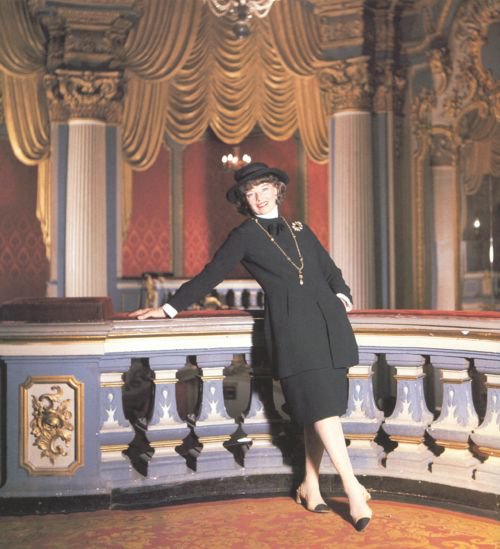
It’s hard to describe why I like Coco. It’s not an especially good musical due mostly to a lackluster book by Alan Jay Lerner. But the music by Andre Previn is quite effective and memorable. Unfortunately for Coco, its cast album was poorly recorded (were they in an airport hangar?) and it lives on as a curio. (When I go browsing through record stores, I always find unopened copies of the LP). But word that the show will be revived in NY as part of Musicals in Mufti this fall brings me back to the score, which is admittedly one of my guilty pleasures.

The musical, about the life of Coco Chanel, opened at the Mark Hellinger in December 1969 and is an important footnote as Katharine Hepburn‘s one and only musical. The show was so physically large that it couldn’t go out of town, opting for 40 previews in Manhattan, with director Michael Benthall’s worked eventually assumed by choreographer Michael Bennett, who was fresh from Promises, Promises and about to open Company. There were reports of clashes between the star and members of the creative team (set and costume designer Cecil Beaton especially hated her), as well as the anecdote where she provided tea for construction workers building the Paramount Plaza across the street to keep things quiet during matinees.

The critics were merciless. The musical received six pans out of six from the major critics. But Hepburn did not. Reviews like those received by Coco would be enough to shutter smaller shows that very night. But the presence of Hepburn – then a three-time Oscar-winning star – in a Broadway musical brought in audience members in droves. Ms. Hepburn, who had signed on for a limited six months extended her stay, ultimately leaving on August 1, 1970. The show continued with Danielle Darrieux to dwindling receipts closing two months later, a total of 329 performances. The musical recouped when Ms. Hepburn returned to take the show on its national tour.

Upon hearing the cast album for the first time, Hepburn reportedly commented “I sound like Donald Duck.” Hepburn’s singing style is not dissimilar to that of Rex Harrison in My Fair Lady, only it features a great deal of her New England timbre and vocal idiosyncrisies. But what she lacks in pitch she sure makes up in star power. Hepburn owned the stage from start to finish. She was very vocal about her insecurities (mostly after the fact) but she powered through. According to the books, the race for best actress in a musical was  legitimate nail-biter between Hepburn and her good friend (and eventual winner) Lauren Bacall, who was headlining in Applause that same season.

At Hepburn’s final performance, Coco played like a smash. On her entrance at the top of the show, Ms. Hepburn received an extended standing ovation, to cries of “Bravo!” from the audience. From the beginning, Hepburn sinks her teeth into the show and runs with it until the finish. There isn’t much in the way of plot. An aged Coco Chanel wants to come out of retirement while taking an impressionable girl as her protege (while clashing with the girl’s chauvinistic boyfriend). Not much else happens, except Hepburn dropping comic bon mots, recalling her history and carrying musical numbers with her no nonsense vigor and unceasing energy.

One of the most impressive moments of the show came in the first act where Coco recounts her entire history to the ingenue. A musical scene lasting fifteen minutes and two songs – “Mademoiselle Cliche de Paris” into “The Money Rings Out Like Freedom,” the latter of which turns into a tribute to the basic black dress. The musical hinges on Hepburn’s patter in this musical scene and at this final performance the scene received 90 second standing ovation.

Suffice it to say, the show isn’t very interesting when Hepburn is offstage. She has a friend and confidante in her accountant Louis (the always reliable George Rose) and Sebastian Baye, an arch nemesis in what I think may be the gayest character ever written for musical theatre. (When asked if Baye is homosexual, Rose’s response: “Oh, I’m afraid he’s way beyond that.”) Rene Auberjonois played him with so over the top, that I imagine his performance was offensive even to the sensibilities of 1970.  The character fulfills every stereotype and then some, but the main problem I have is that the character has absolutely no motivation or arc. He wants Chanel to fail – and to help her fail – but for no discernible reason.

Gale Dixon and David Holliday play the young couple and they barely register a pulse. Dixon is about as bland as it gets, and it seems impossible that Chanel would look at her twice. Holliday sports a spectacular tenor, but while his voice soars his line readings crash with a thud. There is very little to care about these two. She’s naive and relatively new to Paris; he’s a reporter and total boor. I am amused by his act one number “A Woman is How She Loves” for its exceptional melody, but that’s about it.

Coco doesn’t receive many revivals; its reputation precedes it and I will admit that Hepburn’s warbling is an acquired taste. Andrea Marcovicci did a run in San Francisco two years ago, and a revision of the show with a new book was workshopped starring Isabel Keating last year in Manhattan (which was a hot ticket and from all accounts worse than the original). Now those fans and cast album connoisseurs will have the chance to see the show this fall at the York Theatre.

When Hepburn made her final bow in Coco, the orchestra segued into a spirited rendition of “Auld Lang Syne” (which was once a great tradition of closing nights). Ms. Hepburn took several bows while the adoring audience cheered for several minutes. When the music ended, Hepburn stepped forward bringing a hush to the appreciative crowd at the Hellinger. Subdued and gracious, Hepburn made the following speech:

“It’s a…obviously an enormously confusing experience to stop in the middle of something that means as much to me as this play di..ha…does and the things that it has represented to me in what people can do for each other. Alan Lerner had the confidence to trust me to do it. I had two good friends: Roger Edens, who is dead, and Sue Seaton, who teaches me every day, who had the force to convince me that I would be able to do this.

Then I started rehearsal and I was very, very frightened. And all these people whom you see in back of me really gave me the faith to go on. Then there was the terror of the opening night and for some wonderful reason for me, you people (audience) gave me a feeling that you believed that I could do it. I… lived a very fortunate life because I had a father and mother who believed in me. I had brothers and sister who believed in me and a few friends who have believed in me. And I cannot begin to thank you enough and I hope that you learn the lesson that I have learned – and that is, I love you and you love me. Thank you.”

Now that’s a star.
A Little Night Music: BWW’s First Look

I won’t go into the production itself, but this casting has had the Broadwayites getting excited. This weekend I get to see Bernadette Peters and Elaine Stritch onstage in A Little Night Music. I cannot wait. The last time I saw Bernadette on Broadway was over six years ago at the final performance of Gypsy and, well, I’ve never seen Elaine Stritch onstage before. The show officially reopens on Sunday, with new reviews from all the major critics – oh and yours truly.

Here’s a sneak peek from BroadwayWorld.

%CODE1%

Belting at the White House

It was nice to see the Obamas welcoming Broadway performers into the White House last week, something that used to happen more often than it has in recent years. But while watching, I couldn’t help but be reminded of some electrifying performances from years past. There was something in the pacing that was just a smidgen off, with some hairy notes and some languid interpretations of the more ebullient numbers (particularly the Hairspray finale), as though the whole affair were under rehearsed (save for the ravishing Audra McDonald who was practically perfect in every way).

This performance is one that kept popping back into my mind throughout the hour and a half I was glued to the White House live stream. Here’s Patti LuPone, accompanied by the US Marine Corps band belting out “Blow, Gabriel, Blow” from Anything Goes for then Vice President George H. W. and Barbara Bush in 1988. (Say what you will about them politically, they are ardent musical theatre fans and supporters). And suffice it to say, Ms. LuPone completely nails it.

%CODE1%

A Little Bit of This, A Little Bit of That…

Life sometimes manages to get in the way of my writing. But that’s not necessarily a bad thing. About three weeks ago, my 17 month old nephew arrived in the United States for the first time (along with his mom, dad and uncle) so life has certainly taken a different route. Much of June was involved with preparation for their arrival; failed attempts at babyproofing, immense amounts of cleaning and shredding of junk mail and even new carpeting, tile floors, etc. We really seemed to leave no stone unturned getting ready for this arrival.

When Jack arrived, my focus shifted considerably from theatre. I’ve not seen a show since they arrived (though I’m thinking of taking my sister-in-law to her first Broadway show – Jack will have to wait a few years for his turn) and have had very little time to blog, be online and have been having a wonderful vacation from the blogosphere.

I don’t know that I’ve ever felt so exhausted in my life. But it’s a good thing. There’s a lot of running around, feeding, putting to bed, day trips, library visits and shopping. (I don’t do diapers). We’ve been busy practically every day with trips around the Hudson Valley and metropolitan area. So far we’ve done Bear Mountain, my father’s firehouse in Scarsdale (twice), my first trip to Coney Island (we skipped Brighton Beach and stuck to the boardwalk). Jack has even gone to the bank. There was also a family celebration of my father’s 70th birthday which was organized by yours truly (I was born July 7, my father July 8th and my mother July 11th).

It’s been quite a trip; and they’re still here for another two weeks – so my focus has been pulled. Not to mention I’ve also been getting more gigs these days, so there’s been a lot more musical preparation around the house. (This past Saturday, I had a wedding at 3 in Croton-on-Hudson, then a second wedding at 6:30 in Brooklyn. I’m still recovering). On top of that, I’ve been so distracted that I can’t really seem to find anything to write about. I don’t know if anyone else in the blogosphere has had that, but I sit down in a rare quiet moment and I’ve got nothing – and after running after an exceptionally energetic baby all day, I’ve actually been going to bed early…well earlier (hey, 12:30AM is sizable for this nipper).

So what has gone on this month? Bernadette Peters and Elaine Stritch have joined the cast of A Little Night Music. Within an hour of curtain, the first night performance of “Send in the Clowns,” was on youtube and it’s a rendition that ranks high with the likes of Johns, Dench and Cook. Word of mouth; however, says that Stritch has been more problematic as Madame Armfeldt, so it will be interesting to see how she grows into the part (and after her disastrous performance of “I’m Still Here” at the White House this evening, I’m seriously having concerns about her memory – she’s 85 and it’s no crime should she need a prompter or earpiece).

George Steinbrenner, the long-time owner of my beloved NY Yankees died last week of a heart attack. While he was known mostly for his antics as the team’s owner, he was also involved with several Broadway productions including the Tony-winning Best Musical Applause. Working in close association with Jimmy Nederlander, Steinbrenner had his hand in about five other shows, all of them failures. However, Mr. Steinbrenner is a Tony nominee himself, as producer of the 1973 musical Seesaw. (Another Broadway tie-in: when Steinbrenner was banned from running the team in 1990 by the MLB commissioner, Robert Nederlander briefly stepped in to take over the management). The Nederlander Organization paid tribute to Steinbrenner by dimming the lights of its nine theatres for a minute on Thursday evening. The final Steinbrenner show was the notorious 1988 flop Legs Diamond, which helped bring an end to the Mark Hellinger Theatre as a Broadway house.

Cast album news: Bruce Kimmel is releasing a second issue of Promises, Promises- this second edition restores David Merrick’s name to its place above the title (as it was on the LP) and is only one disc – the second disc from the initial release (which involves pitch correction and remixing). Masterworks Broadway will be issuing some obscurities including the 1958 NYCO production of Marc Blitzstein’s Regina, an opera based on The Little Foxes that folded on Broadway after 56 performances in 1949. In the coming months, they will also be releasing a 1959 studio recording of Song of Norway and the original cast album of Make a Wish, remastered on CD for the first time. These three will be available for digital download, or hard copies from ArkivMusic. PS Classics releases Sondheim on Sondheim in August and JAY Records issues the original cast album of The Scottsboro Boys in September. Also, the Tony-winning revival of La Cage Aux Folles is poised for a cast recording, with a label to be announced very soon.

On the bookshelf, I have so many things to get to. Currently on the nightstand – The Letters of Noel Coward. But I’ve also got Stripping Gypsy, The Necessity of Theater, Enchanted Evenings on my plate. Not to mention Gower Champion’s biography Before the Parade Passes By (I’m on a Prettybelle kick and interested in learning all I can about that legendary flop). I’m also very intrigued by the impending release of South Pacific: Paradise Rewritten which takes a look at the genesis from Michener’s short stories to its smash success at the Majestic, looking at how Hammerstein softened the racial intolerance in his libretto to make the show acceptable to mainstream Broadway, and also looks at the themes of gender roles and colonialism in the Rodgers and Hammerstein classic. (Which airs Live from Lincoln Center on August 18, and voila! Hollywood is interested in remaking the film!) Oh, and Patti LuPone wrote a memoir…

Other than that? I baby-sit on Wednesday. It’s all about opening doors. Oh – and one last tidbit. Jack has an obsession with youtube, to the point where he comes in, crawls in my lap if I’m at the computer expecting to be entertained. One time I was watching the famed YouTube clip of Donna McKechnie and the original cast of Promises Promises performing “Turkey Lurkey Time” on the Tonys. Not only did he enjoy it, but he pried himself out of my lap to dance around like a madman. He also heard his first ever Sondheim song: “Have I Got a Girl for You” from the OBCR of Company while we were sharing my ipod on a long trip. I guess Steve didn’t know he could make a baby dance in his carseat!