‘Once’ – West End

 OnceLDN

When I traveled to England this year, I had made a firm decision that I wouldn’t see anything that I had already seen, or could possibly see, in New York. The first time I saw the stage adaptation of Once was on its opening night last March (incidentally just prior to my last trip to London). However, I was drawn to the London production solely on a press photo I saw of the show’s West End leads, Declan Bennett and Zrinka Cvitešić. I loved the film and its simple but moving Brief Encounter-meets-folk-rock romance, and had also liked the Broadway production very much, but there was something about seeing these two leads that led me to buy a ticket, thus breaking my own rule. I snagged a seat in the stalls from the show’s website for £19.50 only hours before the curtain.

Currently playing at the Phoenix Theatre in the West End, the London production of Once (which started in Dublin a few weeks back) replicates John Tiffany’s Tony-winning staging. I have to confess I found myself loving the show even more the second time around. I suppose it could be that a second encounter with the show might heighten the experience, but frankly I think the West End ensemble takes the show to another plane entirely. The show as a whole is warmer, more intimate and more visceral. Bennett is exceptionally well cast as Guy: sensitive, soulful and remarkably well-sung. Cvitešić makes an incredible impression as Girl. Seeing the production in NY, I felt that the character was just a quirky, idiosyncratic device. However, Cvitešić plays her like a real person. The personality is still offbeat, but there is also strength, empathy, and frustration; such dimension and depth which delightfully took me by surprise. Together, their chemistry is palpable, taking the stakes to a higher level and make the ending all the more moving as a result.

The entire ensemble was outstanding, but special kudos to Michael O’Connor as Da, whose pre-show “Raglan Road” brought the bustling Phoenix Theatre to pin-drop silence as well as Ryan Fletcher, bleach blonde and eccentric as Svec. Their musicianship is impeccable. I am not the biggest fan of the John Doyle school of actors-as-musicians, but it is so perfect for this show.

I was told by several friends to expect a different kind of audience experience in London; people are more reserved, more guarded and apt to be seemingly less enthused throughout. So imagine my response as the Brits around me sobbed openly during the last 15 minutes of the show, and through the three (!) curtain calls. Since I was flying solo, I made some “show friends” – those people with whom you share two or three hours and then never see again – the two older ladies to my right were long time friends, both Irish. One had flown in for a visit, and the one next to me is a London resident who had picked up last minute tickets. At intermission, realizing I was familiar with the show, one of them asked,

“So you’ve seen this already?”

“Yes, I saw it on Broadway on its opening night.”

“Oh, really? Is it doing well there?”

“Yes, it’s a huge success. And it won the Tony Award for Best Musical.”

“Did you hear that? He says this won a Tony.” (to me) “And to think, we’d never heard of this show before this afternoon!”

The London resident told me about how Once seemed to have slipped through the radar, since the British media has been focusing on The Book of Mormon. Interestingly the two Best Musical winners opened within days of each other, meaning they’ll likely duke it out at next year’s Olivier Awards. We then turned to the topic of ticket pricing. I told them how much less expensive and easier it had been for me to get a ticket for the London production than to the original playing on 45th Street. They were more than a little appalled that theatre in America is as expensive as it is. As the interval came to a close, they unloaded all the recommendations of plays I should see while I was in town. After the bows, the two ladies sat down, tears in their eyes. In our parting exchange, the one next to me grabbed my arm and said, “I need to see this again.”

I wish I could see the original London cast of Once a second and third time myself. (And I really hope there’s an original London cast album).
The 69th Annual Theatre World Award Winners Announced!

The 2013 Theatre World Award Winners for Outstanding Broadway or Off-Broadway Debut Performance during the 2012-2013 theatrical season have been announced! The ceremony will take place on Monday, June 3 at the Music Box Theatre, once again hosted by Peter Filichia.

Bertie Carvel, Matilda
Carrie Coon, Who’s Afraid of Virginia Woolf? 
Brandon J. Dirden, The Piano Lesson
Shalita Grant, Vanya and Sonia and Masha and Spike
Tom Hanks, Lucky Guy 
Valisia LeKae, Motown
Rob McClure, Chaplin 
Ruthie Ann Miles, Here Lies Love
Conrad Ricamora, Here Lies Love
Keala Settle, Hands on a Hardbody
Yvonne Strahovski, Golden Boy
Tom Sturridge, Orphans 

The 2013 Dorothy Loudon Award for Excellence in the Theater: Jonny Orsini, The Nance

The 2013 John Willis Award for Lifetime Achievement in the Theatre: Alan Alda

West End Revisited

I’ve been itching to get back to London ever since my 2012 visit came to an end. I took the opportunity to fly back when I learned that The Union Theatre was going to be presenting the first fully staged production of Darling of the Day in England. The flop musical, with a score by Styne and Harburg, was a fast flop in 1968 but won my fave Patricia Routledge a Tony. I’ve known and loved the score for many years, but have never had an opportunity to see it onstage. An added bonus was the casting of my friend Rebecca Caine as Lady Vale. I booked my flight, and my tickets to this show (its final performance), as well as the first preview of the West End transfer of the Menier Chocolate Factory’s Merrily We Roll Along.

This was all I had planned. I decided a couple weeks before I left to improvise most of the trip, including what theatre I saw. I decided to visit the TKTS booth in Leicester Square and try for day seats (the classy term used in the West End for rush) for either Peter and Alice or The Audience (or both). I wasn’t married to any particular show, idea or tourist attraction and just decided to see what would happen. Trips can be a lot more fun when you have this sort of freedom.

I took an evening flight out of JFK (aka the most cheery place on earth…), and managed to get no sleep on the flight. In a sign that proves I am turning into my father, I mostly avoided the in-flight entertainment and watched the flight tracker. However, I did watch an episode of Miranda during dinner (lesson learned: never watch something that will make you guffaw while you eat). With the exception of allowing myself an extra day, I followed a similar trajectory as I did on my last trip. I landed in Heathrow and made the claustrophobic trek from the airport to Canary Wharf on the underground. Thanks to my pal, Vera Chok, soon to be on stage at The Almeida in Chimerica, I was able to stay in the same house I did last year, with its tremendous location on the Thames overlooking the O2. I collapsed for a few hours in the mid-day, and then ventured out to the West End.

What surprised me most was how much of the layout I remembered. When I arrived the previous year, I had very little clue as to how to get around on the underground or where I had to go. This time, I barely even consulted a map. I soon found myself getting to know the West End: Piccadilly Circus, Leicester Square and Charing Cross Road became familiar sights during my week-long stay. That first day I knew that I would once again hate having to leave this wondrous city.

My original plan was to see nothing I had already seen in New York (or London, with Matilda running in both cities). Well, I scrapped that plan the very first night. Having arrived the morning of the explosion in West, Texas and while still reeling from the tragic events of the Boston Marathon, I decided at the TKTS booth in Leicester Square that I wanted something funny and silly to pass the time. So, I chose One Man, Two Guvnors. The show was my favorite of last season, which I saw three times with its original cast. While the NY production closed with James Corden’s departure, the West End run is now on its third cast.

While it wasn’t as bombastic a show without the original cast (my last experience seeing the show had been their wild, free-for-all closing performance), the play is still unbelievably hilarious. Rufus Hound is not nearly as indelible as Corden, but the staging is fool proof. Some of the improvisational bits included Dead Maggie Thatcher jokes, which went over big. Having seen the show so many times, and being familiar with the staging, I took the opportunity to observe the audience around me during some of the sure-fire bits, notably the uproarious food preparation. Also of note: Josh Sneesby was leading The Craze in the show’s skiffle music. Exceptional musicianship; and Grant Olding’s score is still quite remarkable. I find I listen to the show’s original London cast album more than anything else that opened on Broadway last year.

I made this a one-two punch as I decided on my second night to see the West End transfer of the Tony-winning musical Once. More on this next time.

At Large Elsewhere: Comedy Class

When asked if I wanted to take a physical comedy course, my gut instinct was to find an excuse to say no. I hadn’t attended a class of this sort in probably ten years and my memories of such things are not the happiest. However, starting some time in 2012 and continuing through this year I’ve been finding myself saying “Yes” a la Kander and Ebb a lot more than I used to. Finding no discernible reason why I couldn’t participate, I said yes to my buddy Zach Laks, and I’m glad I did.

The class I attended was part of Parallel Exit’s Comedy Academy, a teaching extension of the Drama Desk-nominated theatrical company. Frankly, I had no idea what to expect and was slightly apprehensive about the whole affair. However, the presence of friends in the class made it much easier for me to just show up and be in the spirit of things. I was even informed that I could just watch if I didn’t feel like participating, but I felt that I had come to be involved. This was one class out of eight in a single series they were offering through the first two weeks of April. I’m not sure how the other evenings progressed, but was told that you could attend any one or all and still manage to get a lot out of the experience. (Having taken just one course, I have to agree with this assessment).

Outside our room in Ripley-Grier, I was introduced to Parallel Exit artistic director Mark Lonergan and company member Joel Jeske, who would be running the class. Once inside, we had a relatively brief warm-up, mostly awareness exercises in which we were asked to picture our frame of mind (mine was a road and field somewhere in Oklahoma – make of that what you will) and then some eye contact and movement work, in which we had to connect with our classmates (with the exception of two, all complete strangers). Then came a sort of pep talk involving some basic principles. We were told not to think too much, that the Method need not apply, but to be clear and specific in the choices we make. We were encouraged to act on our impulses, but to be specific and direct – and to always think of what we were doing in terms of playing.

The first, and simplest, exercise involved walking in a room and making a clear action with an established but invisible prop.  Zach was the first to go and decided that the prop in question was a hula hoop. We all got up one by one as the impulse hit us, and each did something different and unique with this hoop that wasn’t there. (For the record, I lit it on fire and dove through it).

The second exercise is where we started to click more as an ensemble, even though we were once again working individually. Instead of finding something to do with a prop, we were asked to build on what the person before had done, in order to create an atmosphere and give the comedy a sense of space and dimension. The first classmate to go walked into a room, found a mirror and started hacking at her hair. From this, we as a class created an entire room – a frenzied, chaotic hair salon with specific, madcap characters all involved in specific business. (I was an annoyed man reading a newspaper while waiting).

Joel then stepped things up with a partner exercise. Half of the class created a scene as a waiter and customer, the other half created a scene involving a letter containing information about one of the individuals. (I was involved in the latter). I marveled watching these scenes come out of nowhere, all quite funny. Everyone tried something different and interesting. When it was my turn, I ended up playing a cheating boyfriend who has been found out by his ridiculously attractive girlfriend. It was a great opportunity to just go with my imagination and feed off of a scene partner. In our discussions, I found that many seemed to find leading a scene easier. For me, it was the opposite. I loved reacting, and seeing what my scene partner would lob at me.

The piece de resistance came in the fourth and final exercise, involving the entire group. Together, with Joel as a sort of silent film director off in the corner, we created a neighborhood scene involving three couples. For about thirty minutes we established a nonverbal world involving forbidden romance, intrigue, murder, kooks, drunks and puppies. This last exercise didn’t directly involve me all that much; I found that the story which we built out of thin air mostly involved the others in the class, but I marveled as I observed what was coming together in front of me.

What I think I enjoyed best about this experience as a student was the atmosphere in which we played. It was relaxed and open, everyone was encouraging and supportive of one other, enough so that anyone would be comfortable in Parallel Exit classroom.

And I gotta say, there are few things better than making a complete stranger laugh.

‘It’s a Bird…It’s a Plane…It’s Superman’ @ Encores!

Superman-01

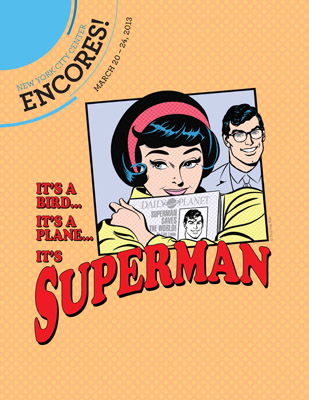
There’s a moment in the finale of It’s a Bird… It’s a Plane… It’s Superman in which the company sings (and I quote) “A-wah-o-wah-o-wah-o-wah-o.” This nonsensical lyric, set in one single measure, encapsulates the joyous silliness of the 1966 musical about the Man of Steel, a light-hearted caper in which two-dimensionality is not only allowed, but encouraged. The musical of Superman gently sends up the square Clark Kent/Superman character and ideal, but it is never overtly self-aware or mocking. It’s also a delicious slice of mid-60s nostaglia, with a period sound that bridges the gap between Broadway brass and the pop flavor of the day. Superman is light, effervescent, and tuneful, and John Rando’s production is the best Encores! has presented since the charming No, No, Nanette in 2008.

The original production closed after 129 performances, in spite of some good notices. Many point to the campy TV series Batman as a major factor in the show’s quick demise. While Superman isn’t groundbreaking, it’s certainly a pleasant divertissement. Certain familiar characters from the Superman universe, including Jimmy Olsen and Lex Luthor, were not involved in the musical. The librettists Robert Benton and David Newman (who later wrote the screenplay for the Christopher Reeve classic), created several new characters for the stage production, while creating a formulaic plot that plays out like an issue of a comic book. There’s not much conflict,but it’s a helluva lot of fun.

Ed Watts was the perfect embodiment of both Clark Kent and Superman; the physique, the look, the tone were all spot-on. And the man can sing like it’s nobody’s business. Jenny Powers brought lovely vocals and some spirit to Lois Lane, a role that can easily get lost among the more colorful characters. The two requisite bad guys, snake oil columnist Mencken (a game Will Swenson) and Dr. Sedgwick (David Pittu, in an inspired comic villain turn) and their vaudeville duet brought down the house. Alli Mauzey was the quirky Sydney, Mencken’s sexy secretary, scoring big with her two numbers (including the show’s breakout song “You’ve Got Possibilities”).

This is one of the most fully realized stagings I’ve ever seen at Encores!, with a comic strip flavored set and vibrant period costumes. Encores! artistic director Jack Viertel did the book adaptation this time around, trimming the libretto to allow a brisk path from song to song while maintaining the gentle satiric element. Director John Rando gives the material the perfect touch; with a quick pace, and some inventive staging (the second act reprise of “It’s Superman” staged as a comic strip was an inspired homage to the original production). Joshua Bergasse’s infectious choreography felt like something straight out of Hullabaloo, with many delightful references to famed 60s moves. At a time when it seems the Broadway is rife with “everything but the kitchen sink” choreography, Superman proved a much-needed antidote. I regret that I was unfamiliar with Mr. Bergasse’s work until now (I have never seen “So You Think You Can Dance” and I gave up on Smash after the pilot), but I do hope that I get to see more of his vital work on any NY stage soon.

Of course the star of the Encores! evening is the score. Charles Strouse’s infectious music is insanely catchy, and Lee Adams’ lyrics are wonderfully clever. Eddie Sauter’s orchestrations are spectacular, with a touch of ’60s Broadway, a touch of jazz and an edge that makes the entire score of Superman extra special. Sauter’s Entr’acte is among the finest ever created for a musical. The charts were played with verve by the Encores! orchestra, conducted by the ebullient Rob Berman.

Now, I’m not saying that Superman should transfer to Broadway, since that would be a great financial risk. However, I could  have easily seen this production five more times. I’d settle for a cast album. Just sayin’…

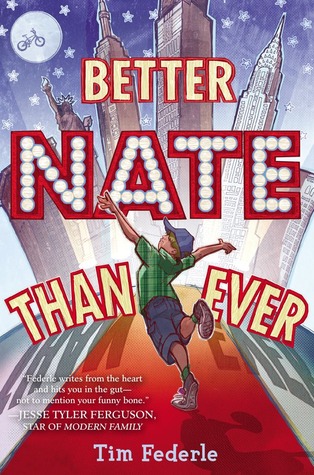
“Better Nate Than Ever”

better nate than ever

When I was in eighth grade, I went to my first audition. There was going to be a local production of The Sound of Music, and since the film was a big part of my growing up (and just that summer we had visited Salzburg – a sign!), I thought I’d give it a shot. I had never auditioned for anything except solo lines in school concerts and such, and this would be my first attempt at a stage musical. In hindsight, I’m rather amazed how supportive both my parents were. They’re not stage parents and they’re not theatre people, but they dived in without a second thought. We noted the audition times and I set to work on my aria (like any normal 13 year old, I chose “Climb Ev’ry Mountain”).

The auditions were held on a Saturday. I went in to the Paramount Theatre in Peekskill, nervous, uncertain. The process felt old school, or at least how it seemed from watching old movies. Each child went in one by one and presented his or her song onstage while the creative team observed from the house. They only had me sing the first 16 bars and then tested my range. Everyone was quite nice, and I did well enough to have a callback to see what else I could do.

I suppose the callback went well, but I was too awed by the stage kids and their moms around me to really notice. Well, not really awed, more like terrified. These kids had that spark of ruthless ambition I rarely enjoy in children, especially kids on stage, and they knew how to sell themselves. I was just a 13 year old boy, short and pudgy, who could sing. Some snooty British director type (who was basically Niles from The Nanny) had us all recite the lyrics of “Do-Re-Mi” with a different “circumstance.” Mine was revealing a poor report card to a parent; I was not Method.

However, then things went the way of Pearl Harbor when I was asked to dance…

I had forgotten about (suppressed?) all of this until I picked up first time author Tim Federle‘s enchanting Better Nate Than Ever, informed by Federle’s own experiences as a show kid growing up outside of Pittsburgh. Nate Foster is the overlooked child, desperate for the attention and affection everyone heaps on his seemingly perfect older brother, wise beyond his years, and earnest to a fault. Nate also yearns to be on Broadway.

When Nate’s best friend Libby finds out about an open call for a Broadway musical adaptation of E.T., she hatches a covert operation for our hero to run away to Manhattan, audition, and return without anyone realizing he’s been gone. Things don’t quite go as planned. The odds are stacked against Our Nate; who must make the trek to the Port Authority, survive a dangerous city he knows nothing about and get himself into that audition room all on his own.

Federle, who has achieved his childhood dream of worked on Broadway in shows like Gypsy, The Little Mermaid and Chitty Chitty Bang Bang  (among others), imbues his writing with professional authenticity, capturing a world that is both workmanlike and glamorous, with scenes of harrowing auditions and callbacks. A first time novelist, his style is charming and spry, capturing the awkwardness and uncertainty that comes with being in middle school. He creates a balance between the hilarity and poignancy that is indicative of  his potential for a long career as an author.

Nate speaking in a self-deprecating first person narrative, seeing the world in an uncanny 13-going-on-40 way that has us cheering for our hero from the first page. Obvious parallels could be made to Marc Acito’s How I Paid for College, but Federle’s prose skews to a younger crowd: similar hijinks but with far less sexuality. Speaking of which, how Federle handles Nate’s sexuality is a triumph of subtlety and nuance. It’s greater testament to the author that he avoids pitfalls and obvious plot points, with many surprises right up to the very end. The book may be written for the young adult set, but the book is for anyone who has ever loved theatre.

While the story unfolds from Nate’s unique perspective, there are two adult characters Federle has created who manage to make a considerable impression: Nate’s Aunt Heidi and her roommate Freckles. I did wish more time was spent getting to know these two, who are interesting enough to warrant their own book. However, we’ll get to spend more time with all the characters as Simon & Schuster will release Federle’s sequel Five, Six, Seven, Nate! in early 2014.

Epilogue: In the course of prepping this post, I asked my mother if she remembered my infamous audition. “Oh yeah. They asked me if you’d an understudy, but I said no. I didn’t want them wasting your time or mine, and then have you not go on.” So, I guess there’s a streak of the stage mother in her after all…

‘Cabaret’ – A Tale of Two Sallys

Cabaret Minnelli

Last night I had the great fortune to attend TCM‘s 40th anniversary screening of the film version of Cabaret at the Ziegfeld Theatre on 54th Street. After waiting for what seemed an eternity outside in the frigid temperatures, we were among the last to be let into the theatre for the screening. Several hundred people behind us were sent away (with a Howard Keel DVD set as a sort of consolation prize).

I hadn’t intended on going. I do enjoy screenings, but I know how these TCM sponsored events, which are free, are a hot ticket and admittance isn’t guaranteed. I figured on sitting this one out. As it turned out, someone who was going asked me if I wanted to come. And in that instant I changed my mind. I figured, why not? I sat with Patty and Emily and my web designer Chris Van Patten. They had released some VIP seating and ushers told us to fill in, thus we found ourselves in the same row as Joel Grey and Bernadette Peters. (Other sightings at the event included Arlene Dahl, Phyllis Newman, Tony Danza and Alan Cumming).

Prior to the screening, there was a Q&A led by TCM host Robert Osborne, talking with the film’s stars Liza Minnelli, Joel Grey, Marisa Berenson and Michael York, mostly rehashing the same stories they’ve shared on TV and radio this week. All this was to celebrate the (year-late) 40th anniversary of the film’s debut. Warner Bros. has undertaken a meticulous restoration and repair and such for a big Blu-ray release (it comes out February 5). The audience was in the mood to cheer, with most names in the opening credits receiving huge ovations (including the stars, Fosse, Kander and Ebb, and even stage director Harold Prince), as well as ample applause after most musical numbers.

This marked the first time in maybe ten years I had watched the film. It’s a fascinating study in adapting a stage musical to the screen, and probably the last truly great film musical to date. The credit is due mostly to director Bob Fosse, who took an unusual stage musical and turned it into an unusual dramatic film with songs. Fosse’s singular vision served to create something purely cinematic, using the medium to its best advantage and pushing boundaries with the film’s sexual and political content. (Props also to David Bretherton’s brilliant Oscar-winning film editing, which only heightens the experience). Major characters were dropped, and new ones were added.  The character songs were discarded, leaving only the diegetic cabaret songs (and adding a couple of others). The only song not sung in the Kit-Kat-Klub is “Tomorrow Belongs to Me,” a beer garden waltz that builds into a chilling Nazi anthem – one of the most unsettling moments in the film.

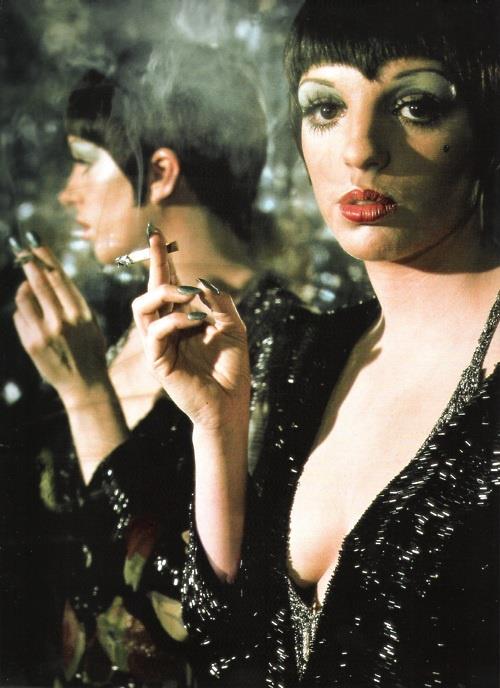
Sally Bowles was meagerly talented and British in Christopher Isherwood’s original book, John Van Druten’s play I Am a Camera and the stage musical (a major reason Minnelli didn’t get the role on Broadway), but for the film she became an American. While the character makes much more sense as a British expatriate, Minnelli gives the performance of her career here. There is nothing she holds back, singing or acting-wise, in this portrait of the ultimate solipsist. Perhaps her being American only adds to how pathetic her delusions are. I think for those in the audience who might be only be familiar with Liza from the tabloid marriages and over the top interview persona, it’s eye-opening to recall how tremendous an actress she is. A captivating performance from beginning to end. Joel Grey recreated his Tony-winning role as the ultimate show-biz creep, the Emcee, to Oscar winning effect. In fact, the cast is universally good, and I think that York’s performance as bisexual British observer Brian is especially underrated.

Cabaret Dench

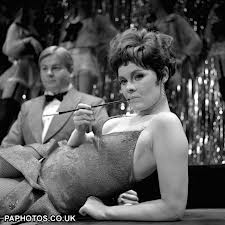
Meanwhile, I have also been paying attention to another Sally Bowles. On record, the film soundtrack, the original Broadway and 1998 Broadway revival cast recordings have always been available, but there is one essential recording of the score that has lingered out of print for two decades: the original London cast album. The 1968 West End production, which played for 336 performances at the Palace Theatre, was noted for its star, a young whipper-snapper by the name of Judi Dench. Thanks to Masterworks Broadway, this album is once again available and a must-hear.

The production also starred Oscar-winner (and future Tony winner) Lila Kedrova as Fraulein Schneider, Barry Dennen as the Emcee and Kevin Colson as Cliff. It’s a wonderful album, and if these performers are not as distinctive as their predecessors, they are all up to snuff.  The London album follows the Broadway album closely, but includes extra snippets of dialogue (especially in the finale), music and Fraulein Kost’s reprise of “Tomorrow Belongs to Me.” The show’s entire finale is included, with Cliff reading the introduction to his book, followed by pieces of the character dialogue and songs and it is particularly devastating. This was also the first time that Fred Ebb’s biting original ending “She wouldn’t look Jewish at all” was restored to “If You Could See Her” (that line ruffled enough feathers on the way to opening night on Broadway that it was changed to “She isn’t a meeskite at all”).

As for Judi Dench, she’s utterly sensational and my favorite Sally Bowles on record. Though far better singers have played the part, she inhabits the character in a way that made me fully understand who she was for the first time. She is dripping with sensuality and cheek through “Don’t Tell Mama” and “Perfectly Marvelous” and her delivery of the “Cabaret” is one of the most gut-wrenching, visceral interpretations I’ve ever heard, with the song becoming its own devastating three act play. It’s hands down my favorite rendition of the song and worth the price of the entire album.

‘The Mystery of Edwin Drood’ @ Studio 54

The Mystery of Edwin Drood

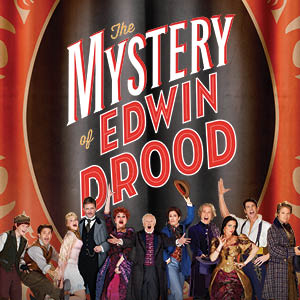
I once did a book report on The Mystery of Edwin Drood in 8th grade because I procrastinated and it seemed like a good idea at the time. Frankly, I don’t remember much, except that the book was unfinished and I got a good grade. While I haven’t picked up the book since, the novel by Charles Dickens caught my attention once again when I discovered Rupert Holmes’ unique musical adaptation. Since Dickens died leaving half the book unwritten – and leaving no authoritative record of “who did it” – Holmes created a novel concept of having the audience vote to determine the show’s ending. (The original production’s tagline was “The Solve-It-Yourself Broadway Musical”).

The musical, also known as just Drood (or as I like to call it, Murder She Drood), is presented as an English music hall with actors playing a Victorian troupe performing the Dickens novel, led by a Chairman (a master of ceremonies, of sorts) to help keep the audience informed of facts, and to keep the show running as smoothly as possible. The knowing metatheatrical nature and general rollicking frivolity behind Holmes’ concept made the show a success at the Delacorte in Central Park, as well as its Tony-winning run at the Imperial.

The musical is back on Broadway, courtesy of Roundabout Theatre, with a wonderful cast headlined by the legendary Chita Rivera at Studio 54. While I didn’t love this production as much as many others have, I had a good time, especially with a stellar cast to help gloss over some of the problematic elements of the piece.

The resulting show is something of a joyous mess. The score is filled with music hall style turns, tuneful and entertaining. There are too many songs (about a half dozen could easily be cut), and not enough plot, and Dickens’ novel ultimately becomes an afterthought in this theatrical exercise. However, it is the execution of the concept and the free-for-all voting experience that makes the show a pleasant divertissement.

The legendary Chita Rivera is game but not quite right for the Princess Puffer, with a Cockney accent that veers somewhere between Brooklyn and Staten Island. However, she is so mesmerizing onstage, it’s almost impossible to look at anyone else whenever she’s around. Stephanie J. Block is the title character; hilarious and spirited with a voice to last for days – that famed E is no joke.

Will Chase is near-perfect as Jasper, finding the comedy in the split personality (and likeliest murderer) and singing exceptionally well. However, his pronounced breathing between phrases drove me nuts. Jim Norton is the Chairman, charming but surprisingly subdued. Betsy Wolfe is Rosa Bud and scores with the hauntingly beautiful “Moonfall,” (and her Jennifer Tilly-esque delivery of the line “Good one, Helena” should never be forgotten). Peter Benson, Gregg Edelman and Robert Creighton are also on hand to supply some distinctive period comedy flair.

The company mingles with the audience in the moments leading up to the rollicking opening number, but the show lags and doesn’t reach this same pinnacle until after the rousing “Don’t Quit While You’re Ahead” when the narrative ends and the concept takes over. Nevertheless, there is much fun to be had, especially if you just show up for the second act.

For those who are interested, the night I saw the show, Helena Landless (the sublime Jessie Mueller) was voted Dick Datchery, Neville Landless (a game Andy Karl) was voted the murderer, and the Puffer and Bazzard were voted the lovers (made all the more raucous as Rivera, on the eve of her 80th birthday, pushed Peter Benson’s face into her bosom).

Sunday Night Musings

My 2013 theatergoing started with my first trip to the Metropolitan Opera in about 4 1/2 years. Out of the blue, I got a message from Roxie asking me if I was interested in seeing Turandot and I thought for about a split second before saying yes. Puccini’s music is glorious – ask me some time to tell you about my experiences playing one of Cio-Cio San’s cousins in Madame Butterfly sometime – and this opera intrigued me. I only new the famed “Nessun Dorma,” a showstopper if there ever was one but I was curious since I knew it was Puccini’s final work, and that he died leaving it unfinished. I was captivated by this bizarre piece with its antiquated gender politics, bizarre Asian aesthetic and similarities to The Taming of the Shrew. Also, I was amused that they stopped to sing to the moon for what felt to be fifteen minutes. But, oh those melodies! And that glorious singing! Zeffirelli’s production is first-rate, and that set is to-die-for; however I had forgotten that Met Opera intermissions are longer than the norm. Here, the first intermission was 45 minutes, longer than the first act itself. It didn’t detract as it allowed Roxie and I the chance to catch up on other things, and to plan future visits to the opera, as I don’t intend on staying away another four and a half years.

Walking through Midtown recently, I noticed that the Music Box Theatre has replaced its traditional marquee with a digital one since the closing of One Man, Two Guvnors. It’s not the first one I’ve noticed; I don’t know when it happened but the classy New Amsterdam Theatre now houses one as well. Now, I understand that digital is the way of the future, but there’s an utter charmlessness in these LED screens. Instead of a billboard or sign that stands out, these two theatre marquees become just more billboards for tourists to ignore. And frankly, for being all state of the art, the quality is cheap. Let us hope this lunacy is just a trend.

I recently read Maurice Walsh’s short story “The Quiet Man,” which later became the basis for the eponymous film classic – and one of my all-time favorites starring John Wayne and Maureen O’Hara. The 1952 Oscar-winner is receiving its long-overdue Blu-ray release this month (and by all accounts it looks exquisite) so I’ve been paying attention and felt it time to check out the brief, 20-something page story about short boxer Paddy Bawn Enright, his wife Ellen Roe Danaher and his feud with his brother-in-law Red Will Danaher. And as fate would have it, the Irish Repertory Theatre will be presenting the first NY revival of the musical adaptation of the film/short story, called Donnybrook! with a score by Johnny Burke and book by Robert McEnroe, starting in February.

The show ran only 68 performances in 1961, but featured lovely songs and performances from Art Lund, Joan Fagan, Susan Johnson and Eddie Foy, Jr. (Also in the cast was Philip Bosco as Will Danaher). The original cast album has never been officially released digitally (though some rogue labels offer an mp3 for sale on iTunes and Amazon), but I was fortunate to receive a cassette tape copied from the record album. (Side B was the musical version of How Green Was My Valley  – another Maureen O’Hara classic – called A Time for Singing). I later acquired the Kapp Records gatefold LP, which I continue to play every so often. The cast, headed by James Barbour and Jenny Powers looks to be top notch, so I look forward to checking that out soon.

In other flop musical news, both Dear World and Darling of the Day are getting their first UK productions in the next couple of months. The wondrous Betty Buckley will play the Madwoman of Chaillot, which is cause for much excitement, at the Charing Cross Theatre through February and March. The latter, however, interests me more on a personal level. I have long been a champion of Darling of the Day, unavailable for licensing since its 1968 premiere, ever since I first heard the original cast album (which is a must for any show music fan). The Styne-Harburg score is delightful, and Tony-winning star Patricia Routledge is the pinnacle of loveliness as the show’s leading lady. So I am hoping to fly out to see this one, which will star Kate Secombe as Alice Challice (the Routledge role) and Rebecca Caine as Lady Vale. No word on the gents just yet, but the show plays the Union Theatre from March 20 to April 20.