
Rebecca Caine: “No, No, Cosette!”

becks

What becomes of a light lyric soprano when her personality is, shall we say, a bit darker than that of her repertoire? This was the premise behind Rebecca Caine‘s new cleverly titled cabaret No, No, Cosette!, which played The Pheasantry in London. Caine, who famously created the role of Cosette in the original company of Les Miserables, is a noted singer who has had a hybrid career bouncing back and forth between opera and musical theatre. She is arguably most famous for her performances in Les Mis as well as The Phantom of the Opera, having played Christine Daae in both London and Toronto. However, these two roles are the tip of the iceberg when it comes to the soprano’s diverse career.

Ms. Caine started the evening on a literal high note with the tango “Jealousy,” her second note a D above top C. It set the standard for the evening – flawless technique and crystalline tone matched by a coy, subversive sense of humor. In her opening remarks, Caine commented on the disparity between the roles she’s played and who she really is before launching into spirited renditions of Harper and Zippel’s “The Ingenue” and “The Diva’s Lament” from Spamalot (hilariously tossing the line “I’ve no Tony awards!” at her close friend and former Les Mis co-star, Tony-winner Frances Ruffele, in the front row).

The repertoire was eclectic, from operetta to contemporary opera, musical theatre (both British and American) as well as specialties. Among the composers heard were Sondheim, Coward, Novello (someone I feel I need to know more about), Ricky Ian Gordon, Frank Loesser, Maury Yeston, Jerry Herman and Marc Blitzstein. (Ms. Caine also spoke of her admiration for Blitzstein’s Regina, and is perfect for the role of Birdie if anyone should have the forethought to produce this underrated opera).

Following a complex aria from Gordon’s My Life with Albertine, Caine treated the audience to “The Song is You,” one of my favorite Kern-Hammerstein songs (from Music in the Air). An effective pairing of “So in Love” from Kiss Me Kate with “Losing My Mind” from Follies was delivered to devastating effect. Similarly, she combined “I Saw Him Once,” Cosette’s cut number from Les Miserables with a ravishing “Somebody Somewhere” from The Most Happy Fella. Her rendition of Vernon Duke’s “Words Without Music” was utterly enchanting.

Ms. Caine was accompanied by Nathan Martin, who performed “I Hold Your Hand in Mine.” As a team they had great rapport, as he helped her on various numbers throughout the evening. The soprano’s cheekier side shown through with Blitzstein’s “Modest Maid,” Tom Lehrer’s “Masochism Tango,” and infamously, the Lapdancing Aria from Anna Nicole Smith: The Opera. She finished her set with Carlotta’s number “This Place is Mine” from Yeston’s Phantom, culminating in a thrilling high C finish.

The applause was deafening, drawing Ms. Caine and Mr. Martin for an encore, Coward’s “If Love Were All.” If anything, the applause was even more thunderous than before, bringing the duo back out on stage. For a second encore, Caine joked that her husband told her to “sing something they all know,” before the pianist started playing the vamp to “Think of Me,” Christine’s first song from The Phantom of the Opera. I admit, I have very little time for POTO, but will sit up and take notice when Ms. Caine is singing the score. If anything, Ms. Caine’s mellifluous soprano is sounding better than ever, and it was a pleasure to hear such stellar singing.
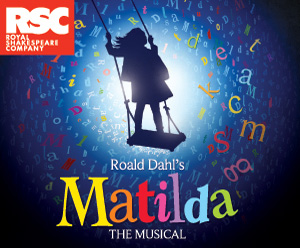
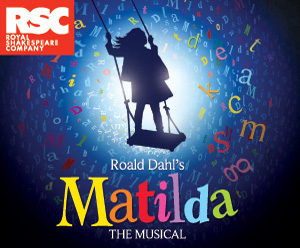
“Matilda” – West End

Matilda_Musical_RSC

Ladies and gentlemen, Matilda the Musical is a hit. A big, beautiful smash hit. The sort of intelligent, literate musical comedy that makes you want to throw your hat in the air and cheer. This is the kind of show that comes around once in a generation, and will likely run into the next one. Simultaneously touching and subversive, Roald Dahl’s story of an unloved prodigy who learns to stand up to the bullies in her life has become a beautifully realized stage property. Matilda is, to quote from its opening number, a miracle.

A child of exceptional mental faculties, Matilda has taught herself to read and has an unlimited capacity for mathematics.  Her weekly reading list could fill a college syllabus, and her imagination is limitless. But her garish, vacuous parents think she’s a freak, and her head mistress, Agatha Trunchbull, would rather Matilda went to prison for life without parole. The young child must use the extraordinary gifts of her mind to fight the bullying adults, and in that conflict librettist Dennis Kelly and composer-lyricist Tim Minchin crafted a deliriously tuneful and clever musical with astonishing élan, though I do think there should be a musical button to end the first act. (For my thoughts on the score, here’s my post on the original cast album).

Matilda is far more sophisticated than those other musical theatre children who have come before her (Oliver and Annie come readily to mind), and much to my relief – and key to the show’s triumph – is that the role is written and directed to be played like a normal child, minus all trappings of the affected, cloying child actor. The charming, takes-no-guff Sophia Kiely played the role the night I attended. (Ms. Kiely rotates with three other actresses). The role is exceptionally large, with huge monologues, musical soliloquies and exhausting choreography. Ms. Kiely was utterly superb; I was in her corner from the moment she critiqued Romeo and Juliet for having a “touch of stupidity” in her establishing song “Naughty.”

Bertie Carvel is astonishing as Miss Trunchbull. Playing the enormous bully in panto tradition, Carvel finds so many surprising shades: we see not only her villainy but the insecurities, the craving for attention and her femininity. Almost every line and gesture is laugh inducing, with a distinctive speaking voice that only adds to the overwhelming impact of his performance. His second act number “The Smell of Rebellion,” is a physically grueling showstopper, built around a rigorous exercise regimen complete with a trampoline vault. Carvel executes the number without missing a single breath. It’s a marvel, and I hope Mr. Carvel will be brought over to delight Broadway audiences next year.

As for the rest of the adults, Paul Kaye is Matilda’s father, a dimwitted mean-spirit who espouses the pros of “Telly” during interval. Josie Walker decked out in a garish wig and pink fishnets plays Matilda’s narcissistic, dance-happy mother (and is joined by Gary Watson’s deliriously sleazy Rudolpho for a tribute to vapidity, “Loud”). Lauren Ward is warm and endearing as Miss Honey, the meek teacher who, thanks to Matilda, develops a spine and learns to stand up to the oppressive Trunchbull. Peter Howe was hilarious as Matilda’s dimwitted older brother, punctuating scenes with his inane comatose utterances. Melanie La Barrie adds humanity and humor as Mrs. Phelps, the kind librarian who encourages Matilda’s love of reading and story-telling.

Peter Darling’s choreography is inventive and engaging, from the cleverness of “School Song” to the swings of the irrepressibly nostalgic “When I Grow Up” to the Spring Awakening send-up of “Revolting Children.” Matthew Warchus, who was responsible for my beloved revival of The Norman Conquests several years back, is in peak form with a staging that will rank among his best work. Rob Howell’s set, made up of wooden blocks and offbeat, oversize scrabble tiles that spill into the house is a visual delight, a perfect arena for his off-the-wall costumes.

I was so taken with the musical, I bought a ticket for the Saturday night performance. The second viewing allowed me a closer look at the nuances in the staging and choreography, as well as the details of the set. It also gave me a chance to see an entirely different cast of children, with a witty and wise Eleanor Worthington-Cox as the title character. Comparisons would futile, as both young ladies were equally effective in their distinctive interpretations. Also, Paul Kaye was out and I saw understudy Peter Howe offer his own unique, effective portrayal of Mr. Wormwood. I’m quite impressed how the production celebrates performers’ individuality. No matter which cast you see, the show will be in excellent form.

I’m in London Again

It took eight years, but I have finally returned to England. It started in the fall when I couldn’t stop listening to the cast album of Matilda, and I found myself clamoring to see the show. I have usually waited for the West End smashes to arrive on Broadway in order to experience them. But given how much I appreciated this show, I figured it was time for me to stop waiting and just go. I bought my ticket in December and impatiently played the waiting game. As fate would turn out, for this weekend of theatre, Matilda would mark my first-ever experience seeing a West End show (all previous visits to England were, alas, bereft of theatre). More on that musical hit in another post, I’ll just say that I’m seeing it again tomorrow night.

I left JFK via Virgin Atlantic, but unfortunately was unable to get much sleep on the plane. I rarely can; I don’t sleep well sitting up, and can feel every bit of turbulence. I ended getting about 15 minutes of twilight sleep on what was a 7 hour flight. I took in My Week with Marilyn to pass the time. Michelle Williams was absolutely superb as Marilyn Monroe. Hell, most of the cast was (except Julia Ormond, who didn’t seem to have much of a grasp on Vivien Leigh). The script was a bit rote, but it held my interest throughout. Eddie Redmayne was good as Colin Clark, but Kenneth Branagh walked away with everything with his funny, brittle performance as Sir Laurence Olivier. Special kudos to Dame Judi Dench, whose performance as Dame Sybil Thorndike made me unreasonably happy.

Now, I’ve flown before, but I haven’t been on a train in England since 2000, when I visited by brother in Oxford. And I have never experienced the London Underground. After getting through customs, I made the trek to the tube. The first order of business was getting an Oyster card. I had researched it online several times, but that didn’t quite prep me for the menu options and my sleep deprived self just sort of stared glassy eyed at a screen for a long beat. Fortunately, they had a gentlemen there to assist me. I got on the Piccadilly line with a map of the underground and little knowledge except that I was to meet my hostess after reaching the Whitechapel region (Jack the Ripper’s old haunt).

I got on with my suitcase and laptop bag and sat down. I was in a fog so I failed to realize that it was a Thursday morning and there would be commuters heading into the city for work. It wasn’t long until the train was filled to what seemed to be beyond capacity. Being sleep deprived, I just sort of sat and observed everyone around me. Almost everyone was reading something: a book or newspaper. (One committed gent was deep in a game of Angry Birds). Rapidly, the subway car filled up to capacity, and were I claustrophobic I may have had a break down. Uncertain of what transfer to make, I asked a lovely young woman who was more than happy to help. I switched lines and got to Whitechapel with little incident, where I was handed keys to the house I was staying at.

The London rail system is a marvel of cleanliness and efficiency. And you pay for what you get. The rides are not cheap, especially when compared to the NY subway, but Then I had to get to a different line two blocks away. I am staying in a house in the Canary Wharf area thanks to my pal Vera Chok, actress, producer and artistic director of the London-based theatre company Saltpeter. The house is overlooking the Thames, and about 50 feet from the water itself with a most spectacular view. The O2 Arena is across the water, and in general it’s just a resplendent place. Getting to this house was really no problem, and I opened the door and settled in. After squaring away some minor details, I passed out for several hours.

First on my agenda was the evening’s performance of Matilda. After my nap, I got cleaned up and went out to discover the West End. I have never been through the area in any of my previous trips, so it was all going to be new for me. A couple of rides later, I was out at Leicester Square and wandered around, making my way to the Cambridge Theatre to pick up my seats. Nearby is the famed Dress Circle, so I made a pilgrimage and picked up a couple of London goodies before meeting my Twitter/Facebook friend Rebecca Caine for the first time, and folks she’s even more delightful and funny in person than she is online (and she is one of my favorite presences on Twitter). I was less than a day into my trip, and our meeting is already one of the happiest memories I’ll treasure from this trip. We grabbed a quick bite before the show, then Caine, a West End Eliza, giving me a fast tour of the Covent Garden area before we both went to see Matilda.

As for the show itself, that post is pending as jet lag has gotten the best of me…

“Carrie” @ MCC

It’s a bold move to bring back one of the biggest flops in Broadway history, but MCC has defied the odds with the newly revised Carrie currently playing an extended off-Broadway run. The original was the stuff of the legend (see Ken Mandelbaum’s Not Since Carrie), with a rapid, high profile failure on Broadway in 1988. In the years since, the show’s reputation has only grown. Carrie is back with a vengeance, but in this sanitized and updated revisal, the creators have still not met the potential for a truly remarkable musical.

Based on the Stephen King novel, the musical tells the story of a unique outcast with telekinetic powers sheltered by her religious fanatic mother. When the girl gets her first period in the gym shower, the other girls taunt her which sets this bizarre cautionary tale of bullying into motion, culminating in the prom from hell. I have never really thought of the King novel or film as a horror story, though there are elements (most notably the famous final scene in the film). It’s always felt more like a supernatural drama, with a tortured protagonist who never has a chance at the normalcy she so desperately craves.

The creators of the original musical went back to the drawing board on this revision, first seen in a reading in 2009. The camp excesses that made the original production jaw-dropping to late 80s audiences have been scaled back or removed. (Most notably, the number about killing the pig). Matt Williams’ choreography is more teen-angsty Spring Awakening’s than Debbie Allen jazzercise prom. The script has been updated with contemporary references to Facebook and smart phones. However, the musical spends too much time with people who are not Carrie and that is a problem. The teachers (Wayne Alan Wilcox and an excellent Carmen Cusack) are underdeveloped. The teenagers come across like leftover tropes from 80s high school comedies, and that grows tedious fairly quickly. It is only when the musical focuses on the relationship between Carrie and her mother that the show becomes truly compelling.

Molly Ranson is stunning as Carrie White. The script doesn’t give her much time to establish who she is, but Ranson creates a portrait of teenage loneliness and sadness that my empathy for her increased precipitously as the show went on. Her first number, the title song, comes quite early and, but it feels rushed and early; as though it should be heard at a later point (and it doesn’t seem like Carrie should be belting so much so soon). But Ranson is ultimately devastating, particularly in the second act. Even more impressive is Marin Mazzie, whose naturalistic performance as Margaret White only serves to make her religious eccentricity far more creepy than I would have thought possible. Mazzie takes us from a seemingly carefree, doting mother to a sober puritanical nightmare in her first five minutes onstage, culminating in the unsettling duet “And Eve Was Weak.” In the second act, she all but stopped the show with the devastating “When There’s No One,” as Margaret, resolved to kill her daughter because of her telekinesis, confronts the loneliness that awaits her.

Those hoping for big, over-the-top “They’re all gonna laugh at you/Dirty Pillows” camp and an excessively bloody climax will be disappointed. The musical relies less on grand effects than it does on the audience’s imagination.  Carrie as a musical is a far cry from the disaster history would have you believe it was, but the revisions don’t make much of a case for it either. Still, considering its status in theatre history and the fact that I never thought I’d get to see a production of it, I am most grateful for the opportunity.

At Large Elsewhere: The “Newsies” Walking Tour

Many of my blog and twitter friends have been quite abuzz with excitement for the stage adaptation of Newsies, which had its world premiere last fall at the Paper Mill Playhouse and will make its Broadway berth at the Nederlander Theatre later this month. The Disney show is currently scheduled as a 12 week limited engagement (and I’m Joseph Pulitzer) running through Tony Sunday, featuring much of the cast from the New Jersey run.

I must confess, I have never seen Newsies, nor have I ever heard an entire song from the score (film or stage). Apparently I was never home while the film was being shown on TV (where it apparently aired a lot) and we’ve somehow missed each other these last 20 years. The first time I saw Christian Bale onscreen was in American Psycho, so I was surprised to learn that he had headlined a musical, period. That being said, when my pals Patty and Emily put out a request for friends to help them film their latest project, the second in a series of Newsies related videos, I figured, “What the hell?”

I still know very little about Newsies, except that Patrick’s Mother is a Very Important Character. However, that didn’t curb my enjoyment of the four hours I spent roaming lower Manhattan with this motley crew.

Here is the Newsies walking tour (which, incidentally, costs $18.99. Cash only. Exact change). Enjoy.

%CODE1%

On the Town: February Edition

The end of February is upon us, which means that my trip to London is only a few weeks away. The month of February was a busy one for everyone it seems, but I spent some of my time prepping for my flight and making arrangements to see friends old and new, as well as arrange to see some shows on the West End, including Matilda. It should be an exciting time, to say the least.

The Oscars are out of the way this year, and overall I’d say it was a rather weak year. The Artist failed to charm me as it has so many others (though I think it was crying out to be a 30s Astaire-Rogers type musical than a parody of 20s silents). I liked The Descendants very much (I have yet to be disappointed by Alexander Payne). I admired The Help, but mostly because of Viola Davis’ staggering performance. The Iron Lady was dreadful: the messy script, shoddy direction and lack of point made it a dull, superficial slog. Though Meryl won the Academy Award in a surprise upset, you’d be much better off watching The Hours or The Deer Hunter; or anything else she’s ever done. War Horse made me want to invest in glue, while I was greatly charmed by Midnight in Paris. 

That said, I am bored with “awards season” in Hollywood. It’s about as tacky and contrived as the relentless string of Republican debates. They keep stretching it out, and adding more “prominence” to guild awards that are nice but not nearly worth the time spent fretting over them. Time will tell, as it always does, what is really long-lasting. Also, the telecast was just bland. The only bits I enjoyed were the Christopher Guest team’s The Wizard of Oz focus group sketch, as well as Emma Stone’s presentation. Ms. Stone was one of the only people who seemed like a human being on that stage Sunday night. Classiest speech of the night goes to Best Supporting Actor winner Christopher Plummer, whose performance in Beginners is warm, winning and quite deserving of our attention. Special kudos to his leading man, Ewan McGregor, who is constantly overlooked by awards bodies in spite of consistent excellence. Oh, and finally, Drive was excellent.

Carrie is back for another night at the prom. However, I made a full day of it. I visited with my good friend Chris Lavin, who works in the wardrobe department of Mary Poppins for a pre-show dinner/catch-up, then found myself making my to the Lucille Lortel for the first time. I don’t often go south of 42nd Street, so it took Tyler Martins and I a little bit of effort to find where we were supposed to go. There were several Twitter friends at the show this particular night, and we decided to head up to Midtown for a post-show drink.

Getting off the subway at 42nd Street, we deliberated in the cold night air as to where we should go. The usual names were bandied about until Joe Allen came into play. Emily Sigal and I both thought the place to be a perfect place to go given what the majority had just seen. Lo and behold, Tyler got a picture of my playbill with the original window card on the Joe Allen flop wall. So we started heading North on 7th Avenue, but soon Tyler and I realized that the gang wasn’t with us. Turning around we saw them talking to a young man in a business suit. We went back to see what was going on.

As it turned out the young gentleman, who was extraordinarily ebullient and even had braces on his teeth, was lost. He was trying to get to Pulse, but couldn’t seem to find where he needed to go. Well, as a group we decided we’d help him out. None of us seemed to know where he needed to go, but out came the smart phones and in an unexpectedly cheery sense of adventure, we set out to find where he needed to go. After some time we got him to where he wanted to go. He offered to bring us in and by us a round, but there was one among us who was not yet of age, so we regretfully declined. But, our man Flint, three or four sheets to the wind, I might add, insisted on hugging us all. We made our way to Joe Allen where we laughed about this occurrence until the place closed down. Only in New York…

The other night I went to see the revival of Death of a Salesman currently in previews at the Ethel Barrymore Theatre, which was an intense cathartic experience that I think I need to see again before I can justify writing about it. However, two things about this revival that fascinated me: the production uses the original set design of Jo Mielziner and the original music score by Alex North. The former is truly extraordinary, and it’s not as if director Mike Nichols is trying to replicate the original: all other elements of scenography are new. It was as if a new family had moved into the house. As for the North score, it is played live in the theatre by a small band off stage right, with a mournful, bluesy quality that subtly punctuates various scenes throughout. Get tickets and go. And go again.

And finally, it was announced that Stephen Sondheim was collaborating with David Ives on a new musical. That’s a Leap Day Miracle, however, I do take exception to something His Majesty said to a London paper regarding a dearth of plays in NY. He’s either just being cranky or not paying attention, but there have been plays popping up on and off-Broadway quite a bit this year. Just this Broadway season alone we’ve had Chinglish, Stickfly, Venus in Fur, Other Desert Cities, Seminar and can anticipate Clybourne Park, The Lyons, One Man Two Guvnors, Peter and the Starcatcher, and more in the coming weeks. And that’s not even counting the plethora of play revivals.

“Merrily We Roll Along” @ Encores!

In 1981, Merrily We Roll Along opened and closed quickly, a devastating failure that became one for the record books. The day after it shuttered, the cast and crew assembled in the recording studio laying down a cracker jack original cast album that has created a generation of ardent fans of the show and score. In 1985, Stephen Sondheim revisited the show with his new collaborator James Lapine, who subsequently revised George Furth’s book, creating a new version of the show that was to fix the problems with the original. As a result some songs have been dropped, some reshuffled and the narrative brought into better focus, musically.

This resulting revision was what the City Center Encores! performed for its first show in the 2012 season (Rodgers and Hammerstein’s Pipe Dream and Jule Styne and Leo Robin’s Gentlemen Prefer Blondes are still to come), giving New Yorkers a rare glimpse into this greatly loved, greatly flawed gem that has, unlike the messy but fun Anyone Can Whistle, proven to be a somewhat workable musical. For one thing, Sondheim’s score, which features  “Old Friends,” “Good Thing Going,” and “Opening Doors,” is just spectacular, and is one of the best ever composed for a failed show.

It’s the book, loosely based on a Kaufman and Hart play of the same title, which moves backwards in time that lends itself to the most criticism. The musical starts in 1976 and works its way back to 1957 (originally 1955, more on that later), with vignettes filling in the narrative gaps established in the tense opening scene. One of the reasons the show is so fascinating is that the plot hinges almost entirely on dramatic irony for context, taking us from the cynical, jaded and embittered former friends to the young, idealists who met on a NYC rooftop the night of Sputnik. The narrative doesn’t quite satisfy, as it feels like a morality play without a clear moral. But what Sondheim and Furth (and Lapine by extension) created feels like a fascinating experiment in form and structure, and while it doesn’t quite all gel as I’d like it, I’m so glad they created it. (If the narrative unfolded traditionally, it would be insufferable).

The cast is absolutely superb. Colin Donnell brings leading man charisma, good looks and voice to Franklin Shepherd, the ambitious composer turned film producer. Lin-Manuel Miranda is captivating as his best friend, collaborator and conscience Charley Kringas, who delivers one of the score’s most fascinating numbers, “Franklin Shepherd, Inc.” which was an electrifying showstopper in Miranda’s hands. Rounding out the trip of friends is Celia Keenan-Bolger, whose incisive interpretation of Mary Flynn, the alcoholic writer with a torch for Frank, is a knock-out. Ms. Keenan-Bolger is at all times devastating and hilarious, dropping one liners with great humor and unyielding depth.

As Frank’s wives, Betsy Wolfe and Elizabeth Stanley are also quite impressive. Stanley, in particular, is an sensation as Gussie Carnegie, the secretary turned Broadway chorus girl turned star turned has-been (in reverse order). Wolfe has a less flashy role, but sings beautifully and makes an incredible impression with the score’s most famous number, “Not a Day Goes By.” Adam Grupper makes a great impression as the producer.

Lapine directed the production, creating a clear and polished staging that works quite well and smoothens some of the rougher edges of the book, though I could have lived without the projections. I doubt we’ll see a better Merrily for quite some time. I do wish that Lapine and Sondheim would go back and take another look at that final scene. The show ends with the stirring “Our Time,” but the lead-in dialogue is unsatisfying and the stakes not yet at a level to warrant the stirring anthem which closes the show. Originally the trio had known each other in high school, but now they meet in this rooftop scene. Now after some perfunctory dialogue, the writers have thrust these characters into an intimacy that is premature, ultimately stunting the emotional potential of the scene.

Another reason to rejoice: Jonathan Tunick was brought in to work on the orchestrations, combining his originals with the score’s revisions for the first time, created what is probably the definitive reading of the score. I only hope someone considers a cast album of this production, as we’re not likely to have it better any time soon.

Walking Among My Yesterdays: Sweeney Todd (2005)

Another revival of Sweeney Todd looms on the horizon, this time poised to start performances in the West End next month. I’ll be in London, and have plans to take in a preview of the production which stars Imelda Staunton and Michael Ball (and has sights set on Broadway). In the meanwhile, I thought it would be a fun opportunity to look back on my thoughts from the 2005 Broadway revival, itself a transfer of the previous London revival, directed by John Doyle.

A Day at the Asylum: The Revival of Sweeney Todd

One of my top three musicals, Sweeney Todd, is currently in revival at the Eugene O’Neill Theatre. The show has been re-conceived and economized for 10 actor-musician-singers in what may be the riskiest undertaking of a musical I’ve ever seen. The company never leaves the stage, except for the 15 minute intermission. They are a part of the staging at every given moment, always in character whether playing their instruments, singing/acting in their scenes or just being part of the general atmosphere. Starring Patti LuPone and Michael Cerveris, the show is an overwhelming theatrical event.

The show is told from Tobias’ perspective, with the events of his incarceration being retold by him and other members of the asylum. The show continues in a very abstract, eerie style playing up the intimacy of the story in a way that is entirely unsettling. The Victorian oppressiveness of the Industrial Revolution is not to be seen in the unit set or costumes, especially Mrs. Lovett’s riotous barmaid/slut getup. (God love her, but Patti could’ve been mistaken for Alan Cumming in Cabaret).

I definitely missed the full sweep of the Jonathan Tunick orchestrations, but admired the musicianship and the way the score has been adapted, though I don’t love that buttons have been dropped from the end of some songs (the first break for applause comes 40 minutes into the show). Patti LuPone, who played the role in the 2000 NY Philharmonic concert has gone back to the drawing boards and done a complete overhaul of the character from her broader, more lovable characterization (which can be seen on the DVD of the 2001 San Francisco Phil concert). This Lovett is dryer and not nearly as likable, with an almost catatonic line delivery in most of her scenes. Her costuming adds a great deal to the evening, with her leather miniskirt and torn fishnets. It didn’t happen nearly as much as I would have liked it, but everytime she started on the tuba, the audience went nuts. She also held back on a lot of music, not always brandishing that famous belt voice of hers, but singing in a low-key style that occasionally reached her stratospheric heights. Her acting in the final scene is absolutely breathtaking.

While I loved Patti’s Lovett immensely, I confess that Michael’s Sweeney had to grow on me, but I was singing his praises by the curtain call.  Though both actors clearly are carrying the evening, this particular production is played as an ensemble piece. Everyone is working toward the same goal, and two star turns are really just pronounced ensemble turns. The entire company is worthy of note, but in particular Manoel Felciano’s Tobias was just staggering, taking the character in a direction I never thought possible.

Another thing about the actors playing their own instruments, they had several musical gags during the dialogue. The musicianship was stellar, no one missed a beat or a note. (Props for memorizing that entire score). There is no conductor for the show, but the one actress playing accordion would occasionally guide the musicians along from time to time.

The actual throat slitting scenes created some of the most indelible images of the evening, with the stage lighting suddenly hitting a red glare as that famous factory whistle, a staple of this musical, blew. Each time a murder would take place, an actor (usually Mrs. Lovett) would pour a bucket of blood into another white bucket slowly, and the audience could hear the liquid building inside the buckets. Grotesque symbolic imagery, and it added so much to the experience.

Overall, I have to say I admired the production more than I loved it. I almost felt that the concept itself distracted me just a bit from the character development and exposition, particularly during act one. I found myself early on remarking during scenes and songs “Wow look at how that actor has memorized the lines, lyrics & the instrumental music.” as opposed to keeping focused on the story. However, by the second act I was completely mesmerized. I can easily see how someone unfamiliar with the show might have difficulty following the show (one of the complaints I have seen on the message boards lately).

It’s amazing to see this show work so well with only ten people and no orchestra or conductor (astounding for a work that is performed at opera houses around the world). It’s a tough ticket right now; it was an enthusiastic and sold out house tonight. They’ve recorded a cast album of this particular production, which makes me wonder if it will hold up well on disc as it does in the Eugene O’Neill. This is one not to be missed.

On the Town: The January Edition

I was just thinking to myself that I couldn’t believe January is over already before my thought process segued to me wondering when I turned into my parents. But we’re already a month into 2012 and so much has been going on.

Today, incidentally, is Carol Channing’s 91st birthday. I was lucky enough to attend a preview screening of the new documentary Carol Channing: Larger than Life this summer at Tavern on the Green with SarahB, and was fortunate to receive an invite to a press screening this month. Dori Berinstein’s new film is a love letter to the Tony-winning star most famous for her roles as Lorelei Lee and Dolly Levi. Running 87 minutes, the film focuses on Carol’s extraordinary discipline and professionalism, her current project to get arts back into public schools and her  late-in-life reunion with middle school sweetheart Harry Kullijian, Channing’s third husband.

The film is highly entertaining, featuring clips from her various TV and stage appearances, with that larger than life persona out on full display. Her dedication to her career, the commitment to her public persona has endeared her to audiences for 60 years, so it was interesting to hear others talk about her, including JoAnn Worley, Lily Tomlin, Barbara Walters and Tyne Daly (to name a few). Amid the laughs, the film hints at the difficulties in her life, most notably her battle with ovarian cancer, but doesn’t delve as deep as one would hope. Still, for fans, this is  a must-see with many laughs along the way. The scenes revolving around Carol and Harry’s reunion have taken on a deeper poignancy, since Harry’s death last month and are quite moving as a result.

Celebrating under-appreciated musicals is something I do well, and enjoy engaging in conversations with other like-minded individuals through Twitter and Facebook. One of the most notable is Jennifer Ashley Tepper, who’s the Director of Promotions for Davenport Theatricals. But when she’s not at her day job, Jen is working on a variety of other projects, but none I think is as near and dear to her as If It Only Even Runs a Minute, a concert series she and collaborator Kevin Michael Murphy have been hosting for the last two years. The duo bring together a group of wonderful singers (sometimes original cast members) and offer a musical theatre history lesson, focusing on musicals that either flopped or have been forgotten with time. With each installment, the show has only grown and is fast becoming a must-see event.

This eighth installment took place in Joe’s Pub (my first time there, btw) and featured songs from shows as diverse as Lady in the Dark, Doonesbury and Bring Back Birdie. It was great to hear “Bernadette” from The Capeman (sung by Jared Weiss) and the manic “Dressing Room Shuffle” from I Sing! (sung by George Salazar and Julia Mattison), shows I confess I am not all that familiar with. Claybourne Elder reminded us that his was the best song in Road Show, with a lovely rendition of “The Best Thing That Ever Has Happened.” Alli Mauzey told hilarious stories  about Cry-Baby and sang her hilarious number, “Screw Loose,” proof that all shows regardless of success or failure should be recorded. Murphy and Lucy Horton sang the spirited “Fireworks” from Do Re Mi, which begat the “shouting the title” trend that became a fun running gag. While I can’t be there to join in on the 9th installment on March 26, as I’ll be in London, I plan to be back for number 10.  (And Jen, you are not allowed to do 1600 Pennsylvania Avenue without me).

I also dropped by the City Center for their Encores! Kick-off event which featured a panel discussion led by artistic director Jack Viertel. James Lapine, Marc Bruni and Rob Berman were on hand to talk about the three shows in this season’s line-up (Merrily We Roll Along, Pipe Dream and Gentlemen Prefer Blondes). Much of the discussion revolved around the history of Merrily, and how it’s evolved since its disastrous debut on Broadway in 1981. Viertel mentioned that Encores! honors the wishes of living writers in how they present these shows, which is why Merrily will be seen in its La Jolla revision (with Jonathan Tunick reorchestrating the revisions to match his original charts).

Bruni talked about the challenges of bringing Pipe Dream, Rodgers and Hammerstein’s biggest flop (246 performances) to the stage today. Based on John Steinbeck’s Sweet Thursday, the novel is about bums and prostitutes living on Cannery Row. However, Hammerstein’s libretto glossed over the grittier edges of Steinbeck’s work, much to the author’s displeasure. Another reason for the show’s difficulty was in its star casting. Originally, R&H wanted Henry Fonda for their lead, but after months of coaching realized he could not sing. They went another route, in star casting the role of Fauna, a madam, with Wagnerian opera star Helen Traubel. The role was originally envisioned to be belted, but with Traubel they took the songs up to more operatic levels. The most interesting facet of the conversation (for me anyhow) was that they were considering taking the keys down for whomever takes on Fauna. (I do have a question for anyone who might know: When Nancy Andrews replaced Traubel, did they lower the Fauna keys for her?)

Berman talked about the music for all three shows (he is conducting all of them), but focused specifically on Blondes, especially paying homage to Hugh Martin’s brilliant vocal arranging, which are some of the tightest in musical theatre. There was no word, though, on who was going to be cast as Lorelei.

Last but not least, the acclaimed revival of Follies played its final performance at the Marquis Theatre, making way for the upcoming revival of Evita. I was at the last show, along with many friends, but in spite of that wonderful last show, I find myself thinking back to two earlier viewings of the show. Both memories revolve around Carlotta. The first was in October, when I went with my friend Kevin, and in the middle of I’m Still Here realizes he is watching the First Lady of the British Musical and leans over declaring excitedly, “Oh my God, that’s Elaine Paige!” The second memory was in November, when I went to see the show with Roxie and Russ Dembin. Another wonderful performance, but Ms. Paige was in Korea for the week and Florence Lacey was on. One of the beautiful things about this production is that understudies were allowed to create their own characters, complete with their own unique costumes. Ms. Lacey was wonderful, and sang a thrilling rendition of “I’m Still Here.”