As it was at the overture and shall be at the exit music, bliss without end. Amen.

Theatre Aficionado at Large

Tag: Flops

“Lovely Ladies, Kind Gentlemen”

The other night I settled in to watch the film adaptation of The Teahouse of the August Moon, an East meets West comedy about the 1946 occupation of Okinawa by the American military. I’ve never read John Patrick’s play (based on the novel by Vern J. Sneider) and I’m sure that productions are few and far between for this once celebrated Tony and Pulitzer Prize winner, so I decided to watch it on a whim. I shared this info on Twitter as I started watching, but soon found myself distracted by the unexpected responses I received regarding the failed 1970 musical adaptation of the play called Lovely Ladies, Kind Gentlemen, which played three weeks on Broadway. (The musical’s title comes from the first line of the play).

When the original play opened in 1953, David Wayne won Best Actor in a Play Tony for his portrayal of the Okinawan Sakini (and was replaced by Burgess Meredith and Eli Wallach). The 1956 film star Marlon Brando in the same role. For the musical, Kenneth Nelson (The Fantasticks) was hired.  The musical featured a cast of 45 actors, 12 of whom were Asian American. The Oriental Actors of America picketed the theatre on opening night, accusing the production of discrimination and incensed that no Asian actors were auditioned for the role of Sakini. (Miss Saigon went through something similar when Jonathan Pryce was cast as the Engineer).

The score was written by Stan Freeman (I Had a Ball) and Franklin Underwood (his sole Broadway credit), with a book by playwright Patrick. Marc Breaux supplied the choreography to Lawrence Kasha’s direction. Clive Barnes wrote in the New York Times, “If the music of a musical doesn’t work, if the lyrics don’t sing, and if the book is best left unread – you have an awful lot of strikes against you.”  Barnes unintentionally caused a bit of chaos by opening his review by stating “Oh dear, I come to bury Lovely Ladies, Kind Gentlemen, not to praise it.” which led to a picketing of the NY Times building by the cast and crew.

With the reviews mostly negative, a closing notice was posted immediately but taken down when the cast and crew agreed to a pay cut. The creative team dispensed with royalties while the Shubert Organization offered assistance in the form of a reduced rental rate for the Majestic Theatre. Producer Herman Levin wrote a lengthy letter to the editor chastising Barnes and blaming the show’s inevitable failure on the critic.

The show eked out a run of 19 performances. Nelson moved to England and never returned to Broadway. David Burns died onstage a mere two months later in the Philadelphia tryout of 70, Girls, 70. Burns, an audience favorite who received raves, would receive a posthumous Tony nomination for Best Actor in a Musical, one of two Tony nominations Lovely Ladies, Kind Gentlemen received (the other was for Freddie Wittop’s costumes). No cast album was made.

Here is “Simple Words,” a lovely duet between Ron Husmann and Eleanor Calbes and the second act musical comedy turn “Call Me Back,” a rare glimpse into a long forgotten musical:

Posted on April 17, 2011 at 3:39 am.

Alexis Smith in “Platinum”

Alexis Smith found her stardom renewed when she created the role of Phyllis Rogers Stone in the landmark original Broadway production of Follies. Magazine covers, interviews and a Tony Award awaited the former Warner Bros player, who was subjected to projects rejected by Bette Davis and Joan Crawford. The success was such that the non-singing star was suddenly finding a second career in musicals, including stock productions of Pal Joey and Applause, playing similar personalities. However, after Follies, she only appeared in one more Broadway musical.

Platinum was a disco-era musical about a movie star of the 40s and 50s who decides to make a comeback in the music industry in the 1970s. The score was written by Gary William Friedman and Will Holt, who had a hit with The Me Nobody Knows. The book was originally written by Louis LaRusso II and the whole production was staged by Tommy Tune. The show’s premiere under the title Sunset was at the Studio Arena Theatre in Buffalo in 1977. Richard Cox costarred as a younger rock star on his way down and major love interest.

With a new book by Holt and Bruce Vilanch, with new direction/choreography from Joe Layton, the rechristened Platinum opened on Broadway at the Mark Hellinger Theatre. The day of the Broadway opening, the cast appeared on The Merv Griffin Show. Lisa Mordente (daughter of Chita Rivera) and Cox performed “Sunset City.” Then Smith sat down for a chat with Merv, Ethel Merman and Shelley Winters, a motley crew (and it’s especially amusing watching Winters hijack the conversation to talk about her upcoming role in the TV movie Elvis). All three ladies to share a common bond – they were all the sole, above the title billed star of a major Broadway musical (Winters starred in the short-lived Minnie’s Boys). While Griffin touted the show as the next big thing, it was eviscerated by the critics and closed after 33 performances. Smith did receive great notices from the critics as well as a Tony nomination, but her future musical theatre work was in concerts and stock tours. Here’s that opening night appearance with Merv Griffin.

But Platinum refuses to die. The show was revised in the early 80s and was revived off-Broadway in 1983 with Tammy Grimes under the new title Sunset. That production closed on opening night. This summer Ben West and his UnsungMusicalsCo, who brought us How Now Dow Jones last summer, gave the show another chance at this year’s Fringe Festival. Smith herself revisited the show in 1982 when she sang her big opening number “Nothing But” at the Kennedy Center:

Posted on October 17, 2010 at 10:41 pm.

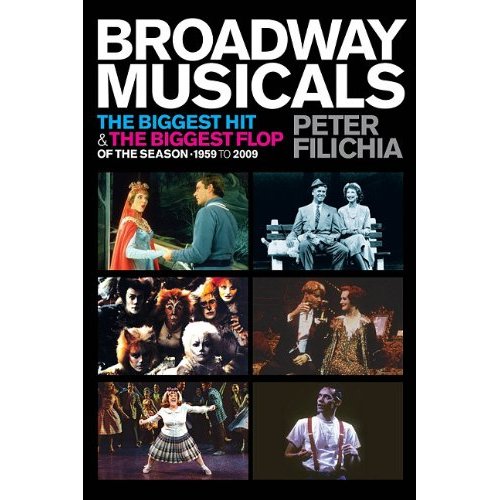
“Broadway Musicals: The Biggest Hit & The Biggest Flop”

In Broadway Musicals: The Biggest Hit & The Biggest Flop of the Season, critic/columnist/author Peter Filichia took it upon himself to examine the Broadway musicals of the last half century, putting together his personal list for the biggest hit and flop of each year. Now, that’s not to say his list is a best and worst sort of deal; he’s more interested in which show was the biggest success or the biggest fall from grace.  He offers analysis of the shows, plus some unique perspectives on the material. On some of the biggest hits of all time, he offers some suggestions that might have made the show better. There are a couple of hits that he clearly has little love for, as well. With financial success as the most critical factor, it’s much easier to pinpoint the break-out hits of the season than failures. In dealing with the flops, he also takes into consideration critical response, award recognition, and most importantly, expectations.

From 1959-2009, he gives us glimpses not only into the good and bad, but also into the shifts in sensibilities and styles over the years. Also, Filichia spices up his conversation by following the traditional definition of a Broadway season June 1 to May 31 – not the Tony season, which means that some Best Musical winners end up in a face-off.

A couple quick examples: I found myself nodding in agreement with Peter’s assessment of 1776, for which he makes an incredible valid argument that it has the greatest libretto of all time (and gives his reasons why it trumps Gypsy in his estimation, too). On the other hand, I wasn’t as enthralled with 1969-70′s greatest hit, Applause, which he listed certain attributes to defend it in comparison to the film. (Not saying he prefers the show, but just pointing out certain strengths). But I think we can both agree it’s not an especially revivable property (After that Encores! concert, I wouldn’t mind if I never saw it again). It’s his opinion, for sure, but his statements are valid and he is able to back them all up.

He goes into the some greater detail with the flops, running the gamut from The Pink Jungle, a camp mess starring Ginger Rogers and Agnes Moorehead that folded out of town to 9 to 5. Frankly, it is usually more interesting reading how it all went wrong than right, which is part of the appeal for flop enthusiasts like myself. There are even a couple of shows listed here that I knew nothing about, particularly one that closed before rehearsals even started. More shows fail than succeed, and therefore there are some years where he weighs several different options before settling on his final choice. There are also some interesting correlations as creative staffs find themselves with the biggest hit one season..then the biggest failure some time later. (There are also three musical sequels on the list). Stephen Sondheim isn’t represented in the biggest hits column, but has three shows in the failure column. As a consolation, Peter allows the composer/lyricist the final word. And, yes, 1600 Pennsylvania Avenue makes the cut, and not without the requisite praise for Patricia Routledge’s “Duet for One.”

The book makes for a rather quick, engaging read, each show receives similar treatment to the flops in Ken Mandelbaum’s Not Since Carrie, a compilation of essays. It’s well-researched, but I know for fact that Peter has seen many of the shows he talks about himself. His recall is impressive and can pretty much remember every single show he has seen. There are a couple of small errors here and there but nothing extraordinary (if Applause Books wants to hire me to proofread, I’m available). If you read the book, I also encourage you dropping Peter an email; not only is he incredibly gracious but he gladly welcomes the conversation (We’ve been in contact for over eight years now, starting when I was a freshman in college!).

And finally, whether or not he chose Prettybelle or Lolita My Love as the biggest flop of 1970-71, well, I don’t want to spoil everything…

Posted on October 12, 2010 at 10:50 pm.

Flop Revival

There was incredible excitement around some blogs and message boards yesterday because there was a private industry workshop reading of the legendary 1988 failure Carrie. It’s the show so well known for its failure that it even inspired the title of a book on the subject of failed musicals (the essential Not Since Carrie by Ken Mandelbaum). Fans of flops shows have reveled in the bootleg audio and video recordings, marveling at what is good – there are some good moments, especially for Betty Buckley – and howling at some of the campiest material this side of Whoop-Up. (This is the show that featured “Out for Blood” with the lyric “It’s a simple little gig, You help me kill a pig”). The buzz that the show was being revisited was intense – almost as though the show were a cult hit, rather than cult flop.

As I looked around various sites this afternoon, I couldn’t help but notice that there are several high profile flops other than Carrie that are being given another look this season. Glory Days, the only musical in over twenty years to close on opening night, is getting a cast album (no matter the quality, I feel every show should get a recording. It’s a piece of history). However, on top of the album there will be a reunion concert later this month at the Signature Theatre in VA where the piece originated before its misguided transfer to Broadway in May 2008.

Last season’s early failure, A Tale of Two Cities, also refuses to quit. The show is the long-runner of the ones I mention here, clocking in at a whopping 60 performances. The show has already been resuscitated in concert form in England, where producers preserved it. The concert will air on PBS Thanksgiving Day, with plans for a DVD and “International Cast Recording.”

It was also announced that Enter Laughing: The Musical last season’s off-Broadway revival of the failed musical So Long, 174th Street is poised to return to Broadway. Based on the book by Carl Reiner and its subsequent play by Joseph Stein, the show ran for 16 performances at the Harkness Theatre (a hitless Broadway house on 62nd and Broadway razed in 1977). The musical was a surprise success for the York Theatre Company last season, garnering some strong reviews and enough audience buzz to warrant a several extensions and a return engagement. The star of that production, Josh Grisetti, who was poised to make his Broadway debut this week in the ill-fated revival of Neil Simon’s Broadway Bound, is being sought after by the producer to reprise his Theatre World Award winning performance.

This April, to celebrate Stephen Sondheim’s 80th birthday, Encores! is giving us the better known Anyone Can Whistle, which packed it in after 9 performances in 1964. The score offers some gems even if it can’t get past Arthur Laurents’ silly libretto. It’s due to Sondheim’s later success that the show is given its attention, but perhaps works best as an album or a concert. There have been revisions made to the script by Laurents, but nothing appears to have come from those regional productions. It’s not unusual for Encores! to present failed musicals: Allegro, Out of this World, St. Louis Woman, Tenderloin, House of Flowers, A Tree Grows in Brooklyn, 70 Girls 70 and Juno were all critical and/or financial flops in their original productions. If nothing else, the show should be praised for bringing Angela Lansbury to Broadway – Jerry Herman happened to see the show during its brief run, and the rest is history.

You know me, I love my flops and I love the opportunities to see them. However, it’s unusual that so many failures are being given such high profile treatment. Usually, it was left to Musicals in Mufti to revisit a show like Henry Sweet Henry or Carmelina, often bringing in the creators or similar scholars to help fix the shows. Perhaps next season, Encores! will finally give me Darling of the Day with David Hyde Pierce and Victoria Clark, or the Bernstein estate will be nice enough to let me resuscitate 1600 Pennsylvania Avenue. I’d also enjoy seeing Donnybrook, A Time for Singing, Dear World, Prettybelle, Lolita My Love…

Here’s my question to you: what failed musical would you like to see revived/workshopped/recorded?

One Performance Wonders on Record

A news item twittered via our good friend Steve alerted me to the fact that the failed musical Glory Days will be recording an original cast album. The show, an export of the Signature Theatre in Virginia, opened and closed on the same night in May 2008. Out of town reviews were encouraging (if constructive) and a transfer to NY, especially without any revision was a wholly haphazard thing to do. The original cast will reunite in a recording studio next month to lay down the tracks. Incidentally, Glory Days was the first musical to fold after one performance since the 1985 Goodspeed revival of Take Me Along at the Martin Beck.

It got me thinking about what other one performance wonders (as I like to call these fast flops) have received an Original Broadway Cast Album…

This is what I found:

Here’s Where I Belong - opened and closed at the Billy Rose Theatre on March 3, 1968. Ambitious musical adaptation of John Steinbeck’s allegorical masterpiece East of Eden was penned by Terrence McNally (who requested his name be removed prior to opening), with music by Robert Waldman and lyrics by Alfred Uhry. There was considerable reticence on my part to include this one here as the cast album on Blue Pear LP appears to be a glorified bootleg, however, I since there is an LP with artwork that was available, here it is.

The Utter Glory of Morrissey Hall - opened and closed at the Mark Hellinger Theatre on May 13, 1979. You may recall that I brought this one up to Marilyn Caskey at Angus McIndoe’s after the closing performance of Gypsy this past January. Written by Clark Gesner of You’re a Good Man, Charlie Brown fame, the show had a well received engagement in San Francisco in 1976 starring Jill Tanner as a British headmistress driven to insanity by the pranks of her students. Three years later, the show was revamped for its new star Celeste Holm, who was dreadfully miscast and out of her element (which can be evidenced on the record). The show stayed a week at the Hellinger, though it managed to get out an album and is licensed by Samuel French (I have the libretto!)

Onward Victoriaopened and closed at the Martin Beck Theatre on December 14, 1980. Larger than life historical figures have often made for interesting musicals. 1776, Gypsy, Fiorello!, among others come immediately to mind. However, this musical about Victoria Woodhull, a millionaire stockbroker turned suffragette presidential nominee didn’t quite live up to the standard. Starring Jill Eikenberry as Victoria, the show had music by Keith Hermann and book & lyrics by Charlotte Anker and Irene Rosenberg. Woodhull had long been considered for musical theatre, with proposed shows starring Lisa Kirk, Carol Channing and an out of town failure Winner Take All starring the sublime Patricia Morison.

Cleavage
opened and closed at the Playhouse Theatre on June 23, 1982. The show was a bawdy camp piece written for the Sheffield Theatre Ensemble that had a brief tour in the South before transferring to NY for its brief tenure. The score was by comedy writer Buddy Sheffield and the book was co-written by Sheffield and David Sheffield. It appears to have played successfully in New Orleans and it transferred to NY cast intact for literally a week. It featured such memorable moments as Jay Rogers in drag singing “Boys Will Be Girls”… it was that sort of show.

Dance a Little Closer – opened and closed at the Minskoff on May 11, 1983 and was jokingly referred to as Close a Little Faster by its detractors. The musical was an adaptation of Robert Sherwood’s Idiot’s Delight starring Len Cariou, George Rose, Liz Robertson and Brent Barrett with book and lyrics by Alan Jay Lerner and music by Jule Styne. The creators updated the antiwar play by putting the characters at the brink of nuclear annihilation. The show’s cast album was recorded two weeks after the closing but was left unreleased until 1987.

Two other shows would receive later recordings. Kelly (February 6, 1965), quite possibly the most notorious of all the one-night stands, received ample coverage in Lewis Lapham’s legendary Saturday Evening Post article (and reprinted in Steven Suskin’s Second Act Trouble) got a studio cast album in 1998 restoring the composer and lyricist’s deluded intentions for the utterly misguided, misdirected and misproduced effort. Heathen! (May 21, 1972) resurfaced in New Zealand in 1981 under a new title Aloha! and that cast took the show into the recording studio.

Who Wants to Put on a (Flop) Musical?

I’m bored and in need of a break from all the writing I’ve been doing about the incredible amount of theatre I’ve seen lately. So I did whatever anyone would do when looking to unwind: I decided to check in on the Music Theatre International website, the biggest of the licensing agencies for musicals in the US to see if there were any recent additions to their catalogue. Now, many of you know that I really love the flop musicals. Most of them being lost gems that either failed due to a leaden libretto or public indifference but offering a score of merit. Then there are the real dogs…shows that might make for great camp in revival (and that’s about it… here’s a shout-out to Whoop-Up just for our pal Chris Caggiano!)

While browsing, I was rather surprised to find that there are so many of these shows whose rights are available for amateur/educational performance. Well, if you and your amateur dramatic society want to venture way outside the box this season, here are just a few of the selections at hand. (Sadly enough, my beloved Darling of the Day doesn’t appear to be available for licensing).

MTI: They’ve got some of your more famous: Anyone Can Whistle, Merrily We Roll Along, The Baker’s Wife and Candide. But they’ve also got Amen Corner, a musical version of James Baldwin’s play of the same name by the creators of the mid-70s hit Shenandoah. Lightning didn’t strike twice, as the show folded after 28 performances in spite of the presence of Ruth Brown and current Tony nominee Roger Robinson. If your cast is more operatically inclined, there’s Kean, Wright and Forrest’s only truly original score for Broadway.

Others include By the Beautiful Sea, a charming if uninspired vehicle originally written for Shirley Booth, while Divorce Me Darling is the the flop sequel to The Boy Friend set ten years after the end of the latter. Plus they’ve got a rarity such as 13 Daughters, a 1961 bomb about a Hawaiian trying to marry off his, well you guessed it, thirteen daughters. The cast album available is the original Honolulu company, never released on CD. Plus, they also offer Bock & Harnick’s Tenderloin, the one where “they were taking a risk to write a show about whores.” The score is quite appealing, especially the showstopping act one finale “How the Money Changes Hands” but the show itself creaks.

Samuel French: Kander and Ebb’s half revue/half musical 70, Girls, 70 offers choice material for your talented senior citizens. The literary crowd might be intrigued/appalled by Angel, the musical of Look Homeward, Angel, which lasted all of five performances at the Minskoff in 1978. Ken Mandelbaum has a chapter of his book dedicated to all the musical sequels that have failed: The Best Little Whorehouse in Public is one of the more reviled bombs in recent memory.

If your audience wants to know what happened to Nora after the door slam heard around the world, follow up your Ibsen with some Comden, Green & Hackady with A Doll’s Life, which followed Nora in the years after the play. Donnybrook!, the musical version of Maurice Walsh’s The Quiet Man, deserved a better fate with its spirited score (and a rip-roaring opening “Sez I” for the leading lady) by Johnny Burke. Anyone sick of Finian’s Rainbow on St. Patty’s could offer this as an amusing alternative.

Bob Merrill’s Henry Sweet Henry was too lightweight a show to last on Broadway, but it’s got its simple joys, especially the showstopping “Nobody Steps on Kafritz.” Though they changed the title from The Gay Life to The High Life, the musical about a playboy falling for a virginal ingenue in 1900 Vienna has an astonishingly beautiful score, even using the cymbalom in its orchestration for period authenticity. Great show for a non-singing lead and a stunning soprano (Barbara Cook’s finest cast album performance).

Juno is one of those musicals that has a cult following because of its recording, but has never worked successfully onstage, but has a fascinating score by Marc Blitzstein. A real obscurity: the disastrous Lovely Ladies, Kind Gentlemen, a musical version of The Teahouse of the August Moon that wasn’t even recorded. If you’ve got a sassy sardonic middleaged contralto, there’s the Noel Coward’s lightweight but amusing Sail Away. (Though no sign of The Girl Who Came to Supper anywhere). Ever dream of staging Skyscraper or Smile? Guess what, you can. Aficionados will turn out in droves if you stage Three Wishes for Jamie, or give them the one performance wonder The Utter Glory of Morrissey Hall about a British headmistress driven to insanity by the hijinks of her students (it’s a musical comedy).

Rodgers & Hammerstein: Sure they license the R&H hits, but if you’re bored with Oklahoma! or The Sound of Music, you can always put up a production of Pipe Dream if you’re so willing, and if you’ve got a grandmotherly madam type. The five performance failure Rags offers your operatic soprano big with one of the best scores of the 80s, but very little in terms of script. (This was the show where diva Teresa Stratas threw a chair at Charles Strouse).

A real forgotten gem is the near operatic A Time for Singing, a 41 performance failure that brought How Green Was My Valley to Broadway. While the show took some poor creative license with the story, the resulting show deserved much better than it received. Another utterly satisfying score is The Grass Harp, an intimate musical based on Truman Capote’s story and play. It’s been argued that the story is too slight for musicalizing – and that’s completely valid, but the music and lyrics are endlessly charming. They also own the Irving Berlin catalog, offering the more obscure Miss Liberty and Mr. President. Interestingly enough, while the rights are available for I Remember Mama and Rex are nowhere to be found.

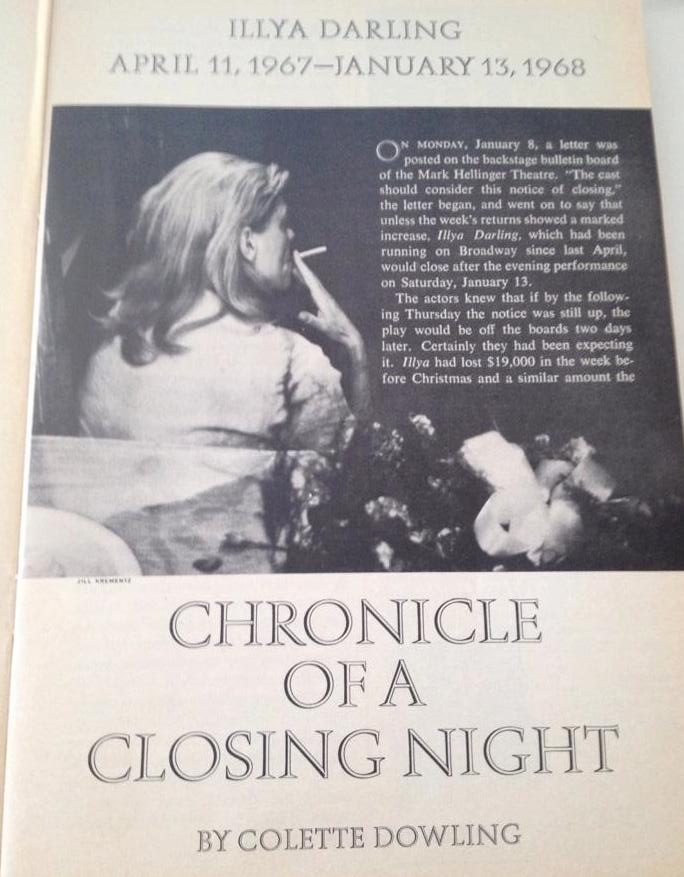
Tams-Witmark: If the leading lady of your society imagines herself something of an Angela Lansbury type, you can test her mettle with the enchanting Jerry Herman musical Dear World, whose appeal hinges on the performance of the madwoman Countess Aurelia. If you hate your fanbase, you can give them Bring Back Birdie, the much-reviled sequel to Bye Bye Birdie. Without Chita to keep the mess interesting, why bother? Best musical winner Hallelujah, Baby! is available for African American musical actors to explore, apologies for the script but none for the fun, if lightweight, score from Styne, Comden & Green. The Golden Apple is challenging, but rewarding in its Americanized update of Homer’s epics set around Mount Olympus, Washington in the years after the Spanish-American war. You can even put on Illya Darling, the musical version of Never on Sunday, for that one fan of the cast album in your region.

So if you’re tired of producing yet another Camelot or Thoroughly Modern Millie, now you know that there are endless possibilities to explore, especially if you enjoy a little risk now and then.

Posted on June 4, 2009 at 9:43 pm.
A place where I can rant and rave about theatre,
theatre history, plus books, film and anything
else that strikes me as entertaining, interesting
or important. Feel free to chime in. If you'd like
me to have a look at your show or have any
interest in advertising, feel free to contact me. Membership
director of the Independent Theater Bloggers Association.

Photo by Kari Geltemeyer

Walking Among My Yesterdays - 2011

1/19 - Avenue Q

1/25 - Knickerbocker Holiday (Collegiate Chorale)

1/30 - Chicago (Fan Day)

2/13 - La Cage Aux Folles

3/8 - Kate Baldwin & Sheldon Harnick: She Loves Him (Feinstein's)

3/12 - Kate Baldwin & Sheldon Harnick: She Loves Him (Feinstein's)

3/30 - How to Succeed in Business Without Really Trying

4/6 - High

4/20 - Born Yesterday

4/27  - The People in the Picture

5/4 - Sister Act

5/4 - The Normal Heart

5/11 - Lombardi

5/19 - Something Wonderful: An Evening of Broadway (Carnegie Hall)

6/3 - Marilyn Maye: It's Maye in May (Feinstein's)

7/14 - Kate Baldwin & Sheldon Harnick: She Loves Him CD release (Feinstein's)

7/27 - Around the World in 80 Days (HVSF)

8/2 - Hamlet (HVSF)

8/7 - Follies (first preview)

8/20 - Jerusalem

8/27 - Sammy Gets Mugged (Fringe)

9/4 - Master Class (closing)

9/11 - Mary Poppins

9/12 - Follies (opening night)

9/16 - The Life and Death of King John (NY Shakespeare Exchange)

10/10 - Give Our Regards to Broadway (Manhattan School of Music)

10/16 - Broadway Originals (Town Hall)

10/17 - Carole Demas: Summer Nights (Laurie Beechman Theatre)

10/26 - Hugh Jackman: Back on Broadway

10/27 - Follies

10/30 - Chinglish

11/12 - Follies

11/18 - Annie Get Your Gun (Walter Panas Players)

Walking Among My Yesterdays - 2010

  • 1/3 - Ragtime
  • 1/20 - Tyne Daly: The Second Time Around (Feinstein's)
  • 2/6 - Betty Buckley: For the Love of Broadway! (Feinstein's)
  • 2/7 - Fanny (Encores!)
  • 2/27 - Yank!
  • 3/2 - God of Carnage
  • 3/8 - Kate Baldwin at Birdland
  • 4/3 - Lend Me a Tenor
  • 4/11 - Anyone Can Whistle (Encores!)
  • 4/23 - Collected Stories
  • 5/19 - Mitzi Gaynor: The Razzle Dazzle Years (Feinstein's)
  • 5/26 - Next Fall
  • 6/20 - A Little Night Music
  • 6/25 - The Bomb-itty of Errors (HVSF)
  • 7/31 - A Little Night Music
  • 8/21 - I Do! I Do! (Westport Country Playhouse)
  • 8/27 - Our Town (Barrow Street)
  • 9/25 - Brief Encounter
  • 10/7 - The Scottsboro Boys (first preview)
  • 11/6 - Lucky to Be Me: The Music of Leonard Bernstein (City Opera)
  • 11/19 - NY Pops' Stephen Sondheim Birthday Bash (Carnegie Hall)
  • 12/12 - The Scottsboro Boys (closing)

Member

Miscellaneous Links

Newsodrome - Theatre News

Blog Directory & Search engine Blogged.com Add to Technorati Favorites

Profile Visitor Map - Click to view visits
Make your own visitor map

Archives

Kevin’s Favorite Things

Kevin on Twitter