As it was at the overture and shall be at the exit music, bliss without end. Amen.

Theatre Aficionado at Large

Tag: Victoria Clark

At Large Elsewhere: Stage-Rush TV Edition

In the last post, I mentioned toward the end that I made an appearance on Jesse North’s Stage-Rush TV (my 2nd!) co-hosting the 70th episode of his weekly web series about the goings-on in New York theatre, especially Broadway. This time around we talked about what shows I was looking forward to, as well as Kate Baldwin’s album, Sister Act and some of the Broadway grosses. Be sure to stick around to the very end.

“Sister Act”

One thing that surprised me about Sister Act: The Divine Musical Comedy (that’s some billing) is that it’s rather entertaining. The new musical based on the 1992 Whoopi Goldberg film wants you to have a good time and pulls out every possible stop to do so. However, it’s also not very good; a by-the-numbers screen to stage adaptation lacking inspiration. Not everything is terrible, the show moves the action to late 70s Philadelphia and makes some concerted effort to be different from its source; but it’s the effort shows at almost every turn.

The show makes its inevitable appearance on Broadway after runs in Atlanta, the Pasadena Playhouse and most recently in London. The original book by Cheri Steinkellner and Bill Steinkellner has been spiced up for Broadway by Douglas Carter Beane (and you can pretty much call Beane’s lines as you hear them). The book’s structure speaks to the second or third tier Golden Age musicals of the ’50s & ’60s. The dialogue creaks, some of the lines are just cheap (Deloris’ “going incognegro” stands out among the worst) and there is a preference for style over substance. These moments can be elevated or overlooked on account of the stellar cast, led by newcomer Patina Miller as Deloris.

Director Jerry Zaks has given the show a fluid pace, while Anthony van Laast’s generic 70s choreography fails to make a lasting impression. Lez Brotherston has designed the costumes, coming up with one exceedingly gaudy variation on a habit after another (and probably used up all the sequins in New York). However, it seems that no one on the creative team had an idea what a nun was like except from what they learned from The Sound of Music, and that showed in the way they were portrayed (with one notable exception, more on that later).

Ms. Miller is quite a find; a real triple threat with charm, poise and exceptional beauty. There is instant likability, and the star takes a more sincere and less sassy approach to Deloris than one would expect from the film. In the spirit of empowerment, she teaches her nuns to stand up to Mother Superior, but simultaneously discovers her self-worth. It’s a breakthrough performance, and we’re bound to see a lot more of Patina through the years, but the role as written doesn’t quite let her soar through the stratosphere as it should. She tears into her numbers with aplomb and style, particularly “Fabulous Baby,” but she is at her most effective and most appealing in the eleven o’clock spot, the title song.

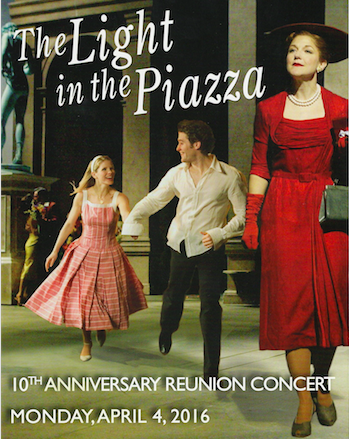
The production’s hidden asset is none other than Tony-winner Victoria Clark (The Light in the Piazza) as Mother Superior. In a role that could easily be a cardboard cutout of austere authority, Ms. Clark grounds the entire production with a fully realized character, and the most honest, compelling performance onstage at the Broadway Theatre. The re-conception of the role was enough to warrant a second solo spot for Mother Superior in the second which offers the character a chance to express her crisis of faith. While I’d prefer to see the soprano as the Reverend Mother in that other aforementioned musical with nuns, it’s just a pleasure having Ms. Clark back on Broadway where she belongs.

Audrie Neenan scores major laughs channeling Mary Wickes as Sr. Mary Lazarus, Marla Mindelle gets to belt it to the rafters as Sr. Mary Robert. Chester Gregory plays “Sweatie Eddie,” the Philly cop assigned to Deloris (and in a more interesting creative stroke, the librettists gave him a backstory with Deloris, including an unrequited crush). Gregory is a major talent, but his number “I Could Be That Guy” doesn’t suit his ability (though it contains the most impressive quick changes in the show). Fred Applegate is always a delight, here playing eager Monsignor O’Hara.

One of the charms of the original film was the way existing Motown standards were adapted for the nun’s choir (also it was fun seeing old Broadway pros like Susan Johnson, Ruth Kobart and Beth Fowler among the singing nuns). This new original score is mostly charmless, occasionally awful and mostly unmemorable. It’s a mixed bag of disco pastiche and typically Menkenesque power ballads. The show is at its worst with songs like “It’s Good to Be a Nun” and the disgusting “Lady in the Long Black Dress” (three thugs sing about seducing nuns). The song most likely to be hummed as you leave the theatre is the opening “Take Me to Heaven” which is given the Golden Age treatment of multiple reprises throughout the show. “The Life I Never Led” feels like something written for and rejected from any of the animated films Menken has scored in the last twenty years.

Broadway has a new middle of the road crowd-pleaser on its hands. Sister Act is destined to do well among tourists and I imagine its success in New York will surpass that of London. I just wish the entire production was as flawless as Ms. Clark.

Merry Christmas

Tony-winner Victoria Clark sings “O Holy Night.” My best to you and yours.

Posted on December 25, 2010 at 1:39 pm.

Lucky to Be Me: The Music of Leonard Bernstein

When I purchased my ticket to NYCO‘s Lucky to Be Me: The Music of Leonard Bernstein a couple months back, it was for two reasons – Victoria Clark was singing and there would be selections from 1600 Pennsylvania Avenue. I’m a big Bernstein fan and love his other shows, but I revel in the opportunities I’ve had over the past couple of years to hear songs from this lost score performed in NY.

You see, ever since I first heard the 1600 Pennsylvania Avenue score and Patricia Routledge’s performances of “Take Care of This House” and “Duet for One” a few years back, I’ve wanted to hear Clark sing those numbers, as she is the closest we have to a Routledge on Broadway today. When the revised score, under the title A White House Cantata, is performed, opera singers without musical theatre backgrounds have been cast and much of the warmth and humor is gone from the role of the First Lady. So you can imagine my reaction when I opened the concert’s Playbill to see that she would be delivering this particular number in the eleven o’clock spot of the show. I think I summed it up best in my tweet: ‘Victoria Clark. Duet for One. They might to need to take me out of here on a stretcher.’

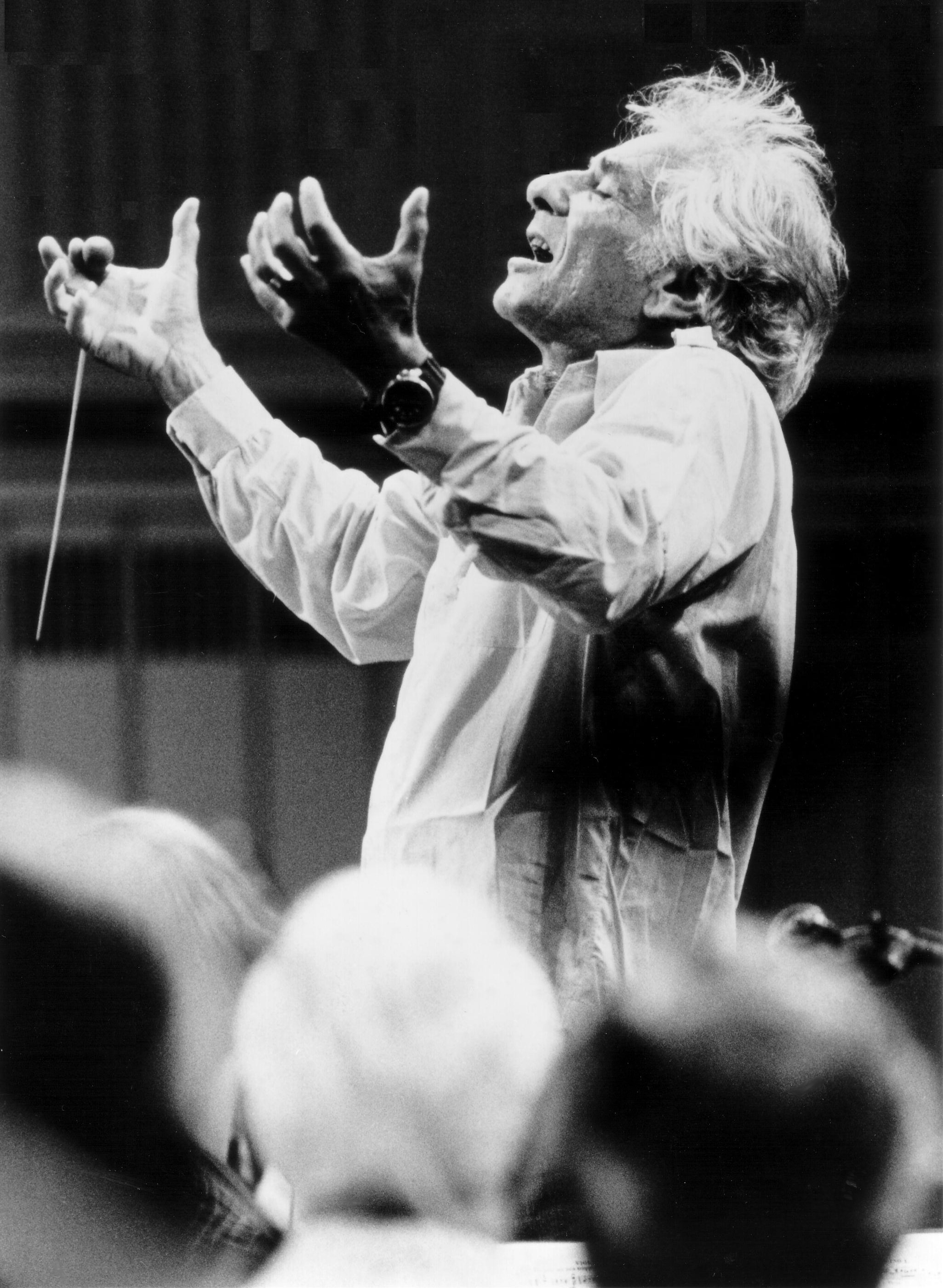
But I love Leonard Bernstein music in general. His material is interesting, tuneful and memorable. There is a distinctive sound that is his and his alone, with syncopation and variation and a love of difficult time signatures. His music evokes many reactions from me personally, and I find I’m pretty much able to appreciate and often love every piece of music he has written (that I’ve heard so far). Even when the wordsmith fails, the melody is still often compelling. And hearing his music live makes me wish I had been able to witness him conduct in person; his melodies are as impassioned and enthusiastic and full of life as he was on the conducting platform.

The entire concert was a delight from start to finish, with only minor quibbles about the technical aspects and staging. The performance was onstage at the David H. Koch (formerly the New York State) Theater. The songs were performed in front of the show curtain, which I found a strange choice. The chorus spent much of its time singing from either side of the first tier seats and the space limitations while not overly distracting, seemed generally constricting.

The first act was dedicated entirely to Bernstein’s classical repertoire, with selections from Mass, Songfest and a segment from his Kaddish Symphony No. 3. Aside from a brief introduction by Donna Murphy, the first act consisted of opera singers from NYCO’s current production of A Quiet Place as well as the reliable NYCO chorus and children’s chorus. Christopher Feigum sang “To What You Said,” Bernstein’s setting of Walt Whitman’s poem in Songfest, which amused me greatly as the melody has been recycled from the Prelude to 1600 Pennsylvania Avenue. Feigum and Joshua Jeremiah, who sang a lovely “Simple Song” from Mass, were the solo highlights of the first act.

There were some other great singers onstage, unfortunately the acoustics in Koch Theatre made it difficult to hear them over the orchestra. The best sound seemed to come from the front orchestra section, where the children’s chorus lined up to sing – facing the stage – and could be heard clearer and louder than any of the trained opera professionals. Sound remained an issue throughout the evening, though it improved greatly during the Broadway themed second act.

As for act two, it was one showstopper after another from Bernstein’s five Broadway musicals. While the shows themselves run the gamut from classic hit to obscure failure, one thing remains consistent: Bernstein wrote damned good scores for all of them. The audience, which was exceptionally polite during the more solemn first act came to life during this portion. Darius de Haas, Michael Urie and Jeremiah Johnson got it started with a lively reading of “New York, New York” from On the Town which segued directly into a winning “Something’s Coming”  from West Side Story. Kelli O’Hara was the ideal Eileen with “A Little Bit in Love” from Wonderful Town, while Christine Ebersole had a field day as On the Town’s Hildy, with dynamite renditions of “Come Up to My Place” (with Urie) and “I Can Cook Too.” Cheyenne Jackson offered a lovely “Lucky to Be Me,” with the unbelievably gorgeous choral arrangement. Michael Baritone Sidney Outlaw held the audience captive with the most haunting rendition of “Seena” from 1600 Pennsylvania Avenue that’s been heard since Gilbert Price originated the part.

Other highlights included Donna Murphy’s hilarious showstopping “One Hundred Easy Ways” from Wonderful Town, while Michael Cerveris countered with a beautifully understated, wistful rendition of “A Quiet Girl” from the same score. Clark and O’Hara danced and trilled their way through the comic duet “We Are Women” written for the original London production of Candide.  The high point of the evening was the combination of “Tonight” (sung by Jackson & O’Hara) with the “Quintet” which featured Cerveris as Riff and our Murphy as Anita. It was an electrifying performance that brought about one of the largest audience responses of the evening.

The finale packed a one-two punch: Ebersole, Murphy, Jackson and Cerveris performed the plaintive “Some Other Time” from On the Town. Then Armstrong and Jakubiak returned to lead “Make Our Garden Grow,” the finale of Candide. There is a section in the song at its climax where the orchestra cuts out while the choral group is singing in 8 parts; its effect is almost indescribable. It is one of the most spine-tingling experiences a person can have as an audience member and a perfect way to cap off the evening.

As for “Duet for One (The First Lady of the Land),” I relish every opportunity I have to hear it. It’s a challenging nine minute number that involves more than just the woman at its center and a successful performance hinges on mastering its deliberately schizophrenic nature. It was probably the starriest version I’ve ever seen with Jackson standing in for Rutherford B. Hayes and Michael Cerveris delivering the oath of office. Clark was a wonder, clearly having a field day with the material. The staging was far more cumbersome than it needed to be, but Clark was a delight. I want to hear her perform it again and again.

The Bernstein estate should seriously reconsider the withdrawal of the 1600 Pennsylvania Avenue score and create a new recording, akin to John McGlinn’s landmark reconstruction of Show Boat. While the show suffered an embarrassing failure in 1976, the score contains some dazzling material, including some truly great music left out of the concert revision, A White House Cantata. I had conversations with some concertgoers after the show and they asked me how I knew this score. They were astonished from the selections they heard and seemed genuinely interested in hearing more. “What a shame they didn’t record a cast album!” The Cantata does have a recording, but its staid and rather boring. Mr. Outlaw and Ms. Clark proved last night that the score deserves better. In the unlikely event the score ever does get a full recording, Clark should be first in line to play the First Ladies.

It’s Enough to Make a Fellow Fall in Love


Here’s a press shot of Patricia Routledge in her Tony-winning performance as Alice Challice in the failed Jule Styne-Yip Harburg musical Darling of the Day. The show lasted 31 performances at the George Abbott Theater (now the site of the Michelangelo Hotel) in 1968. In spite of the musical’s fast failure (which lost an astronomical $750,000), there are many merits within the show and score; friends and fellow bloggers know that I have long championed a revival.

Alice Challice is something of an unsung heroine of the musical theatre. She’s warm, vibrant, vivacious and pragmatic – a young widow living quietly in Putney who refuses to conform to the loneliness of widowhood. Endeavoring to get married, she uses a marriage broker to establish a correspondence with a nobleman artist’s valet. The role calls for a sensible, yet fun-loving comic soprano, “youngish,” whose material runs the gamut from tender ballads to raucous music hall numbers. There aren’t too many theatre fans familiar with Alice, but if they were it’s likely they would fall madly in love with her.

The show, which was a troubled vehicle for Vincent Price (!), failed rather miserably. It was based on Arnold Bennett’s comic novel Buried Alive about a shy British artist (Price) who switches identities with his dead valet “get out of the world alive” In doing so, he also takes up the deceased’s association with the Widow Challice, with whom he falls in love. An expectedly convoluted farce ensues where he paints under his pseudonym and is found out by snobbish art dealers, when all hell breaks loose.

Out of town reception was rather bleak, with critical pans in Toronto and Boston (in the latter city, Peter Filichia said it was one of the worst musicals he had ever seen, but much improved when he saw it in NY). There was a lack of steady direction, with four directors, two choreographers and five bookwriters. (Nunnally Johnson removed his name prior to opening night leaving the libretto without a credit). In spite of all this trouble the musical actually received a surprising amount of positive reviews. The only full-out pan was the estimable New York Times. Clive Barnes opted out of reviewing the show for the paper and it went to second stringer Dan Sullivan instead, who filed his wholly negative assessment. Barnes himself actually visited the show shortly thereafter and looked on it favorably. The Times also had Walter Kerr in the show’s corner, offering his Sunday column as a valentine to her many abilities. Kerr gave the leading lady one of my favorite pull-quotes of all time: “If you don’t catch her act now, you’ll someday want to kill yourself.” (He immediately added “I’ll help you.”)

Lying in the rubble of the show was Routledge’s Tony win (an award she shared with Leslie Uggams of Hallelujah, Baby!) is the show’s original cast album, which is a charming delight and showcases two major assets – Routledge and the elegant and vibrant score by Styne and Harburg (Styne considered this his “Lerner & Loewe” score and his second favorite of his own musicals behind Gypsy). The show has been rather well-received recently in a couple of engagements at Mufti, which saw revisions made to the book and score in an attempt to refurbish the vehicle. Those revisions were supervised by Erik Haagensen, playwright and Backstage critic, who also made an attempt to fix Routledge’s other failed Broadway musical, 1600 Pennsylvania Avenue in the early 1990s.

There was a shoddy live recording made of the show’s opening night performance which plays like a raucous hit. The audience lapped up the stars, doling out entrance applause for the two above the title, as well as character actress Brenda Forbes. The most vociferous reactions were reserved for Routledge, who stopped the show with her first number “It’s Enough to Make a Lady Fall in Love, as well as her reflective “That Something Extra Special” towards the end of the first act. The actress all but reduced the theatre to rubble with her eleven o’clock number “Not on Your Nellie.” During her ovation for the latter (which lasted a full minute), she can be heard very faintly asking incredulously “Is this all for me?” then after a beat pleading the audience “Ladies and gentlemen, if you please.” The audience took this as a cue to give one more cheer before allowing the company to the continue.

As I sit here writing, I realize that the musical opened on this day forty-two years ago. It’s a show that isn’t licensed for stock/amateur performances and has had very few revivals, the RCA cast album has been out of print for many years, but has resurfaced recently via ArkivMusic. The show remains off the beaten path, a lost gem that has brought me a great deal of joy.

Should Encores! (as I want to hear those vibrant orchestrations from Ralph Burns) take up the show, there is only one person in my estimation who should play Alice Challice (and I have Ken Mandelbaum’s agreement on this front) and that is Victoria Clark. What strikes me the most about this particular press shot is the uncanny resemblance between Clark and Routledge, as they share a similar voice type, sensibility and the honor of the Best Actress in a Musical Tony. By extension, I think David Hyde Pierce is ideal for the artist. Then I’d toss in Gavin Lee for the music hall numbers, and Edward Hibbert and Judy Kaye as the noblesse-oblige for good measure.

Darling of the Day is a gem just aching for rediscovery.


Posted on January 27, 2010 at 1:01 am.

"Kitty’s Kisses"

There was this musical about three years ago that came to Broadway by way of Canada. It was about a middle age recluse who listened to his favorite cast album as it came to life in his own living room. It won a few Tonys, was a decent hit and endeared co-librettist/star Bob Martin to the theatre world. The show was The Drowsy Chaperone, which glibly spoofed 20s musicals of a certain ilk, namely the light romantic musical comedy.

The first time I popped on the cast album of Kitty’s Kisses from PS Classics, I was immediately reminded of Chaperone, seeing the character archetypes and plot contrivances popular in the pre-Show Boat musical that are reflected on and spoofed in the later show. Kitty’s Kisses ran for 170 performances, not bad for a show of the era, back when it took a couple of months if not weeks to recoup. Though a success, it wasn’t a blockbuster like No No Nanette or Good News, and like many other likable period shows, fell by the wayside. Some of the songs by Con Conrad and Gus Kahn became hits (the liner notes mention that Queen Marie of Romania was particularly fond of the title song), but the show has been mostly forgotten, except as a footnote in musical theatre history books.

One of my biggest issues with The Drowsy Chaperone was its initial conceit, a point exemplified by the obscurity of Kitty’s Kisses. There was no such thing as an original Broadway cast album during the decade. It wasn’t until the 1930s that record producers started to experiment in preserving musical theatre scores. It seems a minor sticking issue, but it’s what’s kept Chaperone at bay for me. Though, I took less issue with the London production which adapted the show for the West End (the original London cast album predates the original Broadway cast album by quite a few years). My main beef – the Chaperone is pastiche. It’s sometimes amusing, but it’s mostly mediocre, coming off as a rehash of a rehash of a rehash (and truth be told, I hope and pray there is a moratorium on new 20s musical comedy spoofs).

But now we get a sample of the real thing, and what a superb treat it is. Kitty’s Kisses was a success in NY, then it went to London where it was merged with the Rodgers and Hart musical The Girl Friend (that’s something you don’t hear every day…). It was a charmer that got lost in the shuffle, and was eventually shelved in a New Jersey warehouse where it would have continued to languish were it not for Tommy Krasker. He stumbled upon the material while cataloging the Warner Bros music archive in the mid-80s and it is through his persistence that the restoration was done, with painstaking research and commitment as well as the blessing of Donald Kahn, Gus’ son (to whom the album is posthumously dedicated). Now after 23 years of hard work, he has given us an unexpected surprise this fall: an official cast recording of Kitty’s Kisses, billed as “The Bright New Summer Musical Delight.”

Rebecca Luker lends her shimming soprano to the title role, the innocent ingenue who finds herself at the center of the ridiculous period farce going on around her. The big scandal – Kitty poses as a married woman to get a hotel room and is mistaken for another married woman. Hijinks, mistaken identities and your usual machinations propel the plot (of which there is admittedly very little). But as was often the case, the script was an excuse for gags and light musical entertainment. The score is light, engaging and often delightfully clever with Kahn’s lyrics beautifully complemented by Conrad’s period sound. There are many studio recordings of scores that feel like a textbook document of a musical, rather than a vibrant cast album. I can’t remember the last time I’ve felt such joy and warmth from hearing a “lost” score.

The effervescent Kate Baldwin is the free-spirited Lulu, getting things off to a fresh start with the opener “Walking the Track.” Victoria Clark is an absolute riot as grand dame opera singing dowager Mrs. Dennison, who shares the duet “I Don’t Want Him” with Luker. The “Him” in that number happens to be played by Danny Burstein, while Malcolm Gets plays his brother. Andrea Burns and Christopher Fitzgerald take on the specialty material, originally created for vaudeville duo Ruth Warren and William Wayne. Phil Chaffin is Robert Mason, Kitty’s stoic love interest. Jim Stanek makes a brief appearance as the train conductor leading “Choo Choo Love.”

The album was not only produced by Mr. Krasker, but he has supplied a concise, informative essay on the show, its fall into obscurity and its restoration and resurrection. The show’s synopsis is provided by Robert Edridge-Waks. Orchestration was provided by Sam Davis, who also conducted the recording. The CD booklet also contains various production photos and images of newspaper clippings as well as the program from the Newark tryout.

According to the Krasker, the material for the finale ultimo was never recovered. The show ended on Broadway with a song called “Steppin’ on the Blues,” (with additional music by Will Davidson) and I can only assume that the song itself is also lost. The powers behind the album have created a brand new finale ultimo for the show using the composing duo’s Oscar-winning song “The Continental” from the 1934 film The Gay Divorcee. It doesn’t quite gel with the rest of the score, but it’s a cute way of wrapping things up.

This is the third in a line of score restorations for the label; they released Vincent Youman’s Through the Years in 2001 and Kay Swift’s Fine and Dandy in 2004. I cannot stress how wonderful it is that the folks at PS Classics have taken the time to painstaking refurbish a show like Kitty’s Kisses. In the late 1980s and 1990s, John McGlinn was pretty much the go-to archivist with an emphasis on the works of Jerome Kern, while John Mauceri took care of the Gershwin canon. Those albums, however, were intent on restoring the works of major composers. However, the audience for show music sadly appears to be shrinking and shrinking, so less recordings like these are less likely to be made. John Yap make a series of full studio cast albums of entire vocal scores, but given the economy has left them sitting on the shelf (including the full album of One Touch of Venus made with Melissa Errico). It’s unfortunate, as each of these recording provides musical theatre fans with a further link to the history of the genre. I only hope it’s not another five years until PS Classics releases its fourth restoration.

Posted on November 12, 2009 at 3:57 am.

Quote of the Day

“It’s the role of a lifetime. It’s the best written role for a woman over 40 with the possible exception of Mama Rose. Desiree in A Little Night Music is up there too, but Desiree doesn’t carry around the same kind of baggage with all that passive-aggressive Southern charm and complexity. I would say that all three women have spent the majority of their adult lives running away, and come face to face with their destiny, their reason to stop running. All three are terribly vibrant, funny, and flawed beyond belief. That is my favorite thing about them. Their imperfection.”

- Victoria Clark, in an interview with BroadwayWorld, discussing Margaret Johnson of The Light in the Piazza fame

Posted on June 13, 2009 at 1:14 pm.

Quote of the Day: ‘At Large’ Elsewhere

From Peter Filichia’s Diary on 1.30.08:

‘Staying on the subject of the presidency, Bruce Haberkern wrote that “With the events of this month’s Inauguration, it might be a chance to revisit the Bernstein-Lerner unsuccessful musical, 1600 Pennsylvania Avenue. The musical had a lot to do with the black servants’ participation in maintaining the White House, especially in the lyrics of ‘Take Care of this House.’ Today their descendants are actually taking care of that (White) House.”

Kevin Daly mentioned 1600 Pennsylvania Avenue, too, and cast Victoria Clark in the Patricia Routledge role should the show ever materialize. (Given the estates’ feelings about the quick flop, that will only happen when the show goes into the public domain.) But Daly came up with an even more fetching idea that really should happen — and could: “Let’s have the upcoming cast of Blithe Spirit present a one-night concert performance of High Spirits for their Actor’s Fund performance.” If it happens, I’m there!’

Hey Bernstein and Lerner estates, let’s talk, shall we?

Quote of the Day: ‘At Large’ Elsewhere…

From Peter Filichia’s Diary on 10.10.08:

Kevin Daly did Encores! a favor by casting Darling of the Day for them. Now all that Encores! has to do is do the show. Daly wisely chose David Hyde Pierce as Priam Farll, Victoria Clark as Alice Challice, Judy Kaye as Lady Vale, and Gavin Lee as Alfie. I’m interested; aren’t you? Hope the powers-that-be at City Center are listening.

A place where I can rant and rave about theatre,
theatre history, plus books, film and anything
else that strikes me as entertaining, interesting
or important. Feel free to chime in. If you'd like
me to have a look at your show or have any
interest in advertising, feel free to contact me. Membership
director of the Independent Theater Bloggers Association.

Photo by Kari Geltemeyer

Walking Among My Yesterdays - 2011

1/19 - Avenue Q

1/25 - Knickerbocker Holiday (Collegiate Chorale)

1/30 - Chicago (Fan Day)

2/13 - La Cage Aux Folles

3/8 - Kate Baldwin & Sheldon Harnick: She Loves Him (Feinstein's)

3/12 - Kate Baldwin & Sheldon Harnick: She Loves Him (Feinstein's)

3/30 - How to Succeed in Business Without Really Trying

4/6 - High

4/20 - Born Yesterday

4/27  - The People in the Picture

5/4 - Sister Act

5/4 - The Normal Heart

5/11 - Lombardi

5/19 - Something Wonderful: An Evening of Broadway (Carnegie Hall)

6/3 - Marilyn Maye: It's Maye in May (Feinstein's)

7/14 - Kate Baldwin & Sheldon Harnick: She Loves Him CD release (Feinstein's)

7/27 - Around the World in 80 Days (HVSF)

8/2 - Hamlet (HVSF)

8/7 - Follies (first preview)

8/20 - Jerusalem

8/27 - Sammy Gets Mugged (Fringe)

9/4 - Master Class (closing)

9/11 - Mary Poppins

9/12 - Follies (opening night)

9/16 - The Life and Death of King John (NY Shakespeare Exchange)

10/10 - Give Our Regards to Broadway (Manhattan School of Music)

10/16 - Broadway Originals (Town Hall)

10/17 - Carole Demas: Summer Nights (Laurie Beechman Theatre)

10/26 - Hugh Jackman: Back on Broadway

10/27 - Follies

10/30 - Chinglish

11/12 - Follies

11/18 - Annie Get Your Gun (Walter Panas Players)

Walking Among My Yesterdays - 2010

  • 1/3 - Ragtime
  • 1/20 - Tyne Daly: The Second Time Around (Feinstein's)
  • 2/6 - Betty Buckley: For the Love of Broadway! (Feinstein's)
  • 2/7 - Fanny (Encores!)
  • 2/27 - Yank!
  • 3/2 - God of Carnage
  • 3/8 - Kate Baldwin at Birdland
  • 4/3 - Lend Me a Tenor
  • 4/11 - Anyone Can Whistle (Encores!)
  • 4/23 - Collected Stories
  • 5/19 - Mitzi Gaynor: The Razzle Dazzle Years (Feinstein's)
  • 5/26 - Next Fall
  • 6/20 - A Little Night Music
  • 6/25 - The Bomb-itty of Errors (HVSF)
  • 7/31 - A Little Night Music
  • 8/21 - I Do! I Do! (Westport Country Playhouse)
  • 8/27 - Our Town (Barrow Street)
  • 9/25 - Brief Encounter
  • 10/7 - The Scottsboro Boys (first preview)
  • 11/6 - Lucky to Be Me: The Music of Leonard Bernstein (City Opera)
  • 11/19 - NY Pops' Stephen Sondheim Birthday Bash (Carnegie Hall)
  • 12/12 - The Scottsboro Boys (closing)

Member

Miscellaneous Links

Newsodrome - Theatre News

Blog Directory & Search engine Blogged.com Add to Technorati Favorites

Profile Visitor Map - Click to view visits
Make your own visitor map

Archives

Kevin’s Favorite Things

Kevin on Twitter