My Favorite Performances, 2014

Bryan Cranston, All the Way – It was staggering to see Cranston transform from the dopey dad on Malcolm in the Middle to the now-legendary Walter White on Breaking Bad. His performance as President Lyndon B. Johnson during the first year of his presidency was another astonishing feat. A tour-de-force, Cranston delivered a towering performance that was thrilling and captivating and occasionally unsettling. While the play itself seemed like it could have used some editing (particularly in act 2), Cranston’s performance was worth top dollar admission.

Jan Maxwell, The City of Conversation – While my feelings on the play are a bit complicated, my admiration for Jan Maxwell’s stunning portrait of a Washington DC doyenne dealing with her complex family knows no bounds. In fact, I’d say that this is the greatest performance I’ve seen Maxwell give, and I was lucky enough to see her in Coram Boy, The Royal Family, Lend Me a Tenor and Follies. It was worth the price of admission just to watch her excoriate her reprehensible daughter-in-law in the second act. This played off-Broadway at the Mitzi Newhouse; I wish Lincoln Center had just opened it on Broadway so Maxwell could win her long-overdue Tony Award.

Susan Mosher, Holiday Inn (Goodspeed Opera House) – I’ve always considered the film of Holiday Inn superior to its semi-remake White Christmas, and I feel the same applies to the respective stage vehicles. I don’t have much love for holiday shows of any kind, but I was taken by total surprise by this screen-to-stage adaptation of the Hollywood classic. I smiled non-stop for two and a half hours, when I wasn’t laughing at the hijinks. One of the show’s greatest gifts was a bold and brassy comic turn by Susan Mosher as the mechanic/handywoman/den mother who is utterly endearing, loving and outrageous. I cried actual tears of joy as she led a tap-happy company in a show-stopping rendition of “Shaking the Blues Away.” I hope the powers-that-be keep her for the inevitable Broadway run. I want an original cast album, and I want Susan Mosher to win the Featured Actress Tony.

Megan Mullally, Guys and Dolls (Carnegie Hall) – When it was announced that Nathan Lane would reprise his acclaimed performance as Nathan Detroit opposite Mullally, I immediately bought tickets without a moment’s hesitation. The one night concert at Carnegie Hall was musical comedy heaven from the first note to the last. Everyone was on point, well-sung and hilarious. However, it was Mullally’s Adelaide that walked away with the evening. Funny, warm and vulnerable, she had the audience eating out of the palm of her hand all night. I hope she considers revisiting the role in a longer Broadway run.

Kelli O’Hara and Steven Pasquale, The Bridges of Madison County – I ended up seeing this overlooked gem seven times in six weeks, much to my surprise. O’Hara was given the role of a lifetime as Francesca Johnson, an Italian-born Iowa housewife who finds herself having a brief, yet impassioned romance with a National Geographic photographer. She sang gloriously, and imbued the character with such depth that it was impossible not to care for and about her. Pasquale gave one of the finest male vocal performances I have ever heard in my life. Together, they soared in Jason Robert Brown’s glorious duets, especially the showstopping “One Second and a Million Miles,” which got a mammoth standing ovation and cries of “Bravo!” from the packed house at the show’s closing performance on May 18, 2014 (trip #7). The original cast album is one of the best-recorded in the last five or ten years; a thrilling document of a beautiful, short-lived experience.

Alex Sharp, The Curious Incident of the Dog in the Night-Time – Never leaving the stage for a moment in this transcendent adaptation of Mark Haddon’s best-selling novel about a teenage boy with autism, Alex Sharp gives one of the most astonishing tour-de-force performances I have ever seen. I had mixed feelings on the book, but found myself enthralled from beginning to end by this imaginative adaptation. Sharp, fresh out of drama school, is making his professional debut, and his performance is a must-see. I don’t think I breathed during the last revelatory twenty minutes of the first act, as I was on edge as to what Mr. Sharp was going to do next. There aren’t enough superlatives to describe the commanding work he is doing onstage at the Barrymore. I look forward to following what promises to be an astonishing career.

One of the best ensemble experiences I had all year was the Encores! production of The Most Happy Fella at City Center. In a starry cast led by Laura Benanti, Shuler Hensley, Heidi Blickenstaff, Jay Armstrong Johnson and Cheyenne Jackson, the production was a glorious, thrilling success (even more impressive since the entire cast was battling the flu that week). It was a great thrill hearing the original orchestrations played by 35 musicians, and to see a Golden Age musical presented with separate singing and dancing choruses. Of the Encores! shows of this season, this was the one that deserves a second chance and a cast recording.
‘The Sound of Music Live’

nbc-releases-first-sound-of-music-live-trailer

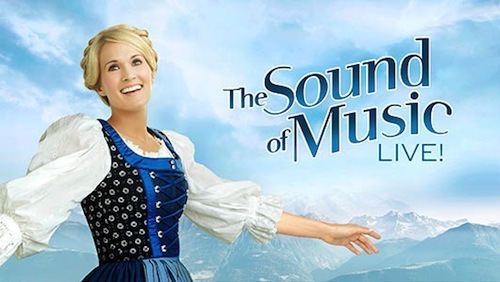
How do you solve a problem like Maria, that chipper almost-nun turned nanny who saves a broken family and outwits the Nazis? Not only is she based on an actual person, but she’s a star turn requiring killer vocals and unlimited amounts of charm and pluck. If these demands weren’t enough, anyone who plays her must live in the shadow of two indelible portrayals: Julie Andrews in the film, and to a lesser extent, Mary Martin in the original stage production. It’s a tough gig that invites comparisons and stirs up quite a lot of nostalgic emotion. NBC took a huge risk last night, dedicating its entire primetime slot to a live performance of the original stage version of the show (book by Lindsay & Crouse). Billed as The Sound of Music Live!, the telecast did have a major problem with Maria. While it wasn’t quite a success, it was definitely worth the effort.

Some history: the musical wouldn’t exist without Mary Martin, the Texas gal turned beloved Broadway icon. She owned the rights to the story and approached Rodgers and Hammerstein to supply a few songs for a play, and they in turn offered to make it a musical. The Sound of Music premiered in 1959 (ten years after the trio experienced a major hit with South Pacific). Incidentally, the show has never been much of a critical favorite, with both the original production and film receiving mixed notices. But it didn’t matter, the show has belonged to the audience since its first performance.

Martin played Maria to standing room crowds for almost two years. She never missed a performance, not even when she filmed her iconic Peter Pan in 1960. That Martin, 45 going on 46 and already a grandmother, was probably too old to play a young postulant didn’t register with critics and audiences. Mary Martin radiated perpetual youthfulness, charm and love from the stage, and that star quality was enough to make the crowds suspend their disbelief. She was surrounded by great talent, including Theodore Bikel as the Captain, and most notably the dignified, Tony-winning dramatic soprano Patricia Neway as the Reverend Mother (Neway was actually six years younger than Mary). The show was the biggest hit of the season and won the Best Musical Tony over Gypsy (in a tie with Fiorello!). Martin received her third Tony as Maria, besting Ethel Merman’s iconic Rose. Florence Henderson headlined the national tour. Meanwhile, in London, the musical opened without an established star and became the longest running show in West End history. The show itself had become the attraction.

For the 1965 film, screenwriter Ernest Lehman smoothed out the narrative and added some conflict to the relationship between Maria and the kids, and also found better placement for some of the songs. Two sophisticated songs for Max and Elsa were dropped. One of Lehman’s more curious choices was to make Elsa a Baroness, stripping her of her political opinions and CEO status, while setting her up as a romantic villain, which was not how she was portrayed in the original production. Rodgers added two new songs (“I Have Confidence” and “Something Good”) to help flesh out Maria. Because of its overwhelming popularity, this film has become what most people expect when they see the musical onstage. The 1981 London revival starring Petula Clark was the first to incorporate material from the film, and other productions have followed suit, including the 1998 Broadway and 2006 London revivals.

As for NBC’s mixed bag telecast, the easiest and most obvious target for criticism is Carrie Underwood, as the entire event was built around her. Ms. Underwood, an American Idol alum and country star, has a great voice, but is severely lacking in acting ability. As I watched the show, I noticed the dichotomy between her singing and speaking. She became increasingly relaxed in her singing, but displayed a jarring disconnect with the dialogue. She just seemed to say words, without registering any emotion or feeling. At first I thought Ms. Underwood was a poor choice for Maria, but as the evening progressed I started to think Maria was a poor choice for Ms. Underwood. She probably would have been better served by Annie Get Your Gun, or some similar show that would play to her strengths and personality.

Ultimately, what Underwood needed was strong direction and she didn’t get that from either Rob Ashford or Beth McCarthy-Miller. Ashford has been assigned many classic musicals but has a perilous tendency to not trust the material. His choreography is quite often all style and very little substance. Case in point: the teenagers in “Sixteen Going on Seventeen” doing a spirited polka through a wooden hillside. I suppose I should just be grateful he didn’t have nuns hitch kicking around the abbey for no reason. What was presented on TV was merely blocking, with far too many intrusive commercial breaks. Issues with pacing and timing were rampant, even marring those scenes dominated by the Broadway stalwarts.

Audra McDonald’s Abbess was very good and her “Climb Ev’ry Mountain” was the musical apex of the evening, but while she had the grace she lacked the gravitas, and only felt like an authentic Mother Superior in her scenes alone with Underwood. All other times, she felt more like the popular nun as opposed to the head nun. The best performance of the night came from Laura Benanti as Elsa. In many ways, the character is far more fascinating in her politicized role onstage, representing those who chose ambivalent appeasement while Hitler took power. Benanti looked like a million dollars, sang like a dream, and her realization that the relationship was over during the last line of “No Way to Stop It” was the finest piece of acting of the night. (It’s also worth noting that Ms. Benanti was social media’s favorite: her name trended *worldwide* on Twitter for five hours). The cast album is worth getting just for these two ladies.

My quibbles aside, I was glad to see a three hour musical presented live on network television. I want to see more presentations like this. I applaud the risk, which seems to have paid off for NBC in press and especially in the ratings. While it ultimately fell short of expectations, it’s certainly worth another try. And I hope whatever it is, it stars Laura Benanti.

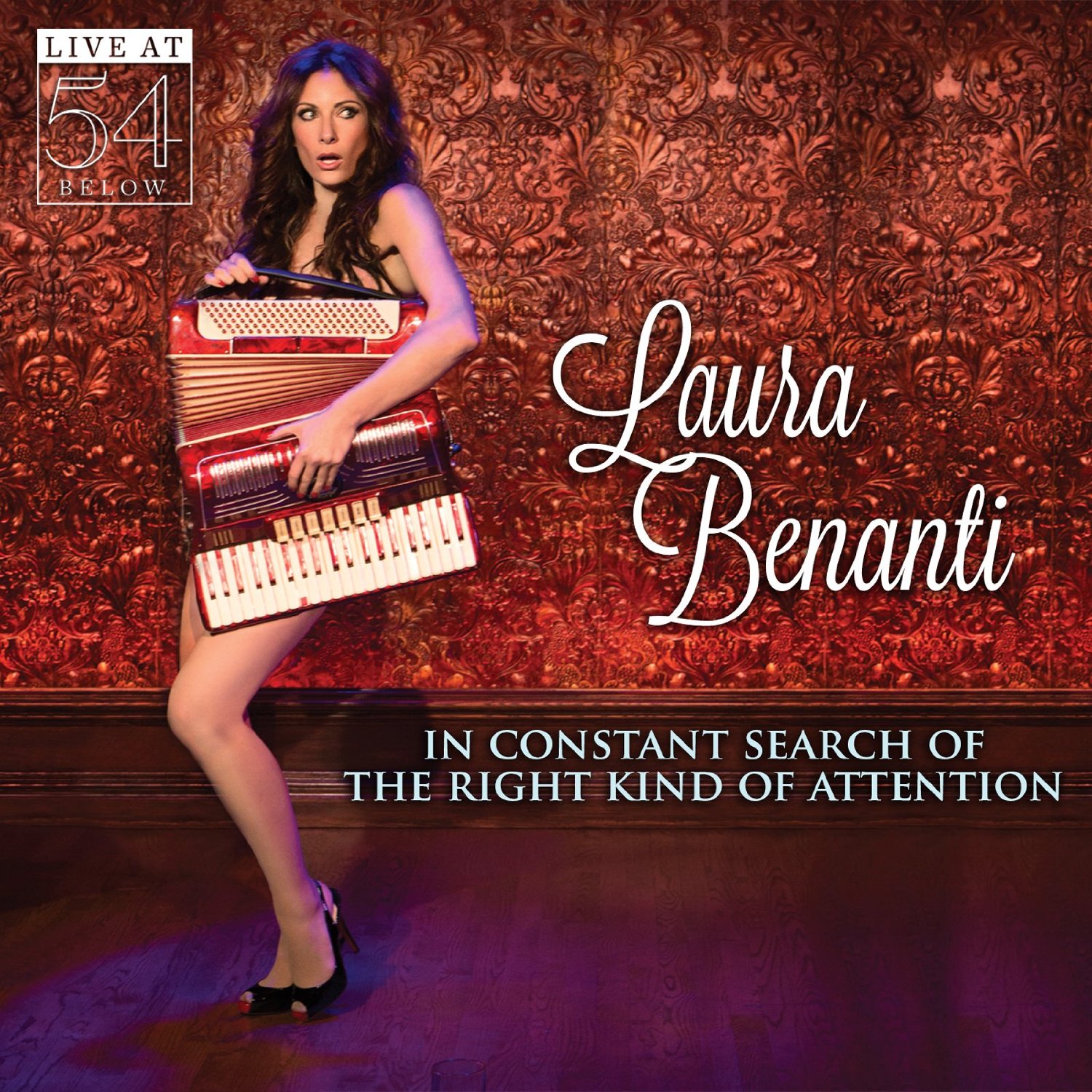
Laura Benanti: ‘In Constant Search of the Right Kind of Attention’

LB54Below

I get the feeling that if you were to go back in time and tell 11 year old Laura Benanti that she would one day be one of Broadway’s most beloved stars, she would’ve thought you were out of your mind. At least, this is the impression I get when I hear Benanti talk about her Old Soul childhood on her essential new album In Constant Search of the Right Kind of Attention (Amazon, iTunes), a live recording of her cabaret at 54 Below released by Broadway Records.

In between her eclectic song choices, which range from Golden Age Broadway to Harry Chapin, Benanti interjects endearing, self-deprecating anecdotes about learning to sing entire Sondheim scores as a pre-pubescent, dressing up as Fosca from Passion for Halloween and crying on the school bus because none of her classmates knew who Rosemary Clooney was. (She pays homage – and bids adieu – to these formative years with an irresistible rendition of  “I’m Glad I’m Not Young Anymore” from Lerner and Loewe’s Gigi). I sense that Benanti herself is still somewhat surprised that the awkward, unpopular girl with the frizzy hair and love of classic movies grew up to be a glamorous Tony-winning leading lady.

My first encounter with Benanti came with the 2007 City Center production of Gypsy. Frankly, I had no idea what to expect, as I was surprised by her casting. However, my jaw dropped in admiration as I watched her transform from awkward Louise into Gypsy Rose Lee during “The Strip.” I went back to see the show three times on Broadway (opening night, post-Tony performance and closing), and it became quite clear to me that Benanti was the heart and soul of that production. I doubt I will ever see a better Louise as long as I live.

With her shimmering soprano, Benanti is clearly at home with classic musical theatre repertoire (“I’m Old Fashioned,” “My Time of Day”), but she is also utterly compelling on contemporary and original material, including two of her own original songs. A tribute to 54th Street comes by way of the modified “On the Street Where I Lived” followed immediately by a mash-up of Ellie Goulding’s “Starry-Eyed” and Lana Del Rey’s “Video Games.” She closes her set by revisiting “Unusual Way” from Nine, which she dedicates to Chita Rivera (who taught her how to take a bow) and offers “Model Behavior,” her dazzling showstopper from Women on the Verge of a Nervous Breakdown, as an encore.

Benanti was assisted by Todd Almond, who served as the evening’s musical director, arranger, pianist, scene partner, back-up singer and accordionist. Almond is also a composer, and he joins Benanti on his “Tilly’s Aria/Frank and Tilly Make Love”, which is immediately followed by Benanti’s rendition of his “Spring is Coming.” His is a voice I want to (and expect will) hear more of in the near future. Also, his arrangements are superb; fitting the atmosphere of each song perfectly.

Some of the best moments on the album are the spontaneous, off-the-cuff interactions she has with the audience (most notably a chance encounter with a gynecologist). It’s clear that Benanti is much more interested in the human connection than with sticking to her script. The star is so at ease in the venue that her performance is all the more charming and humorous, making it one of the best of the Live at 54 Below albums so far.

While Benanti’s recent ventures into TV haven’t been successful (something she discusses on the album – though Go On definitely deserved a renewal), she always comes home to NY as she did with this show, this album and the upcoming Encores! production of The Most Happy Fella. I can’t wait until she is back on Broadway headlining a musical, but in the meantime I’ve got this delightful album to keep me company.

"Side By Side By Susan"

My favorite [tos-ser] Susan Blackwell has been hired by Broadway.com on a permanent basis. With her wacky and unique sense of humor, Blackwell interviews Tony nominee Jonathan Groff and Tony winners Laura Benanti and Sutton Foster. Enjoy:

Lisa Kirk – "The Gentleman is a Dope"

The complete studio cast recording of Rodgers and Hammerstein’s 1947 musical Allegro came out this week. While I’m waiting for the chance to hear it, I figured I’d tide myself over with Lisa Kirk lending that rich alto to the score’s most famous song, “The Gentleman is a Dope.”

Allegro, the team’s first wholly original musical, was highly experimental in its form and structure as it told an allegorical tale of an everyman who finds success, corruption and ultimately disillusionment in the “Big City.” It was met with mixed reaction by the critics and audiences, running a respectable if disappointing 315 performances. The show’s original cast album runs a mere 33 minutes, presenting highlights of what is a very unique score. Allegro was revived for a radio broadcast on NBC radio in 1951 starring John Lund and Jane Powell. It was also the second production of the very first season at Encores! back in 1994 (when it was still more of a concert than a concert staging).

The new album from Sony Classics features every note of the vocal score on two discs with the voices of Patrick Wilson, Audra McDonald, Liz Callaway (in the Lisa Kirk role), Laura Benanti, Judy Blazer, Ashley Brown, opera star Nathan Gunn, Maureen Brennan, Norbert Leo Butz, Marni Nixon (who I’m excited to be seeing this weekend in the Encores! production of Music in the Air) and the master himself, Mr. Stephen Sondheim. Long overdue, we now have an officially complete recording of one of the most intriguing scores of the 1940s. Now all we have to do is wait for a complete cast recording of Weill & Lerner’s Love Life.

As for Kirk, she went onto originate Lois Lane in Kiss Me Kate and would later replace Janis Paige in Here’s Love and offered great support in the original Broadway production of that cult favorite Mack and Mabel. Her final appearance on Broadway was in the 1984 revival of Noel Coward’s Design for Living as Grace Torrence. Her most noted work in film was as the vocal double for Rosalind Russell in the 1962 film version of Gypsy. Russell stated in her autobiography that she sang every note heard in the film, which is quite far from the truth. The recent soundtrack album release included the original tracks that Russell laid down in the studio before they decided to bring in Kirk, who sang the score in the lowest keys I’ve ever heard it sung. Rumor has it that after Ethel Merman died, recordings of Russell’s performances of the Gypsy numbers were found in her apartment. One can only imagine…

The Day Somehow Calls for It

Details pending…

One Last "Turn"

Roxie and I are heading in to take in the final performance of the acclaimed revival of Gypsy. Anyone within a ten block radius of the St. James Theatre should brace themselves for this earth-shattering last Turn.

However, the NYC shenanigans start at a pre-show brunch with Steve and Doug, Sarah and friends (who were at the penultimate performance of Gypsy, forever to be known as the one where Patti tossed out the photographer), Jimmy and Kari (who will also be in the house with us).

"Everything’s Coming Up Laura"

As per my new tradition, I attended a post-Tony performance for the second year in a row. Last year was Grey Gardens, this year it was the revival of Gypsy, you know, the one with the short broad who sings loud? For those of you who know, Patti LuPone, Boyd Gaines and Laura Benanti were all recipients of the Tony award the other evening for their work in this production. A whole gang of us ended up at the show – which included a pre-show dinner at Angus.

The energy in a post-Tony win house is indescribable. A mutual admiration society develops between the kids onstage and the kids in the house. The Gypsy overture began; always a crowd favorite. I noticed Patti LuPone had entered the house with a small stage management entourage and proceeded to get prepared to go on. I had deja vu flashbacks to the final performance of the 2003 revival. On her cue, LuPone vaulted down the aisle of the St. James to the reception of a standing ovation from the crowd. To assuage the fans, she broke and took a very short but deep bow, then got back to work. And here is where I express my disappointment. I had an almost immediate sinking feeling as she began her lines. In the first several scenes, LuPone overshot the runway. Her deliveries were extravagantly broad, and she was playing to the house, not for character. “I hope they didn’t make a huge mistake Sunday night” was the thought that crossed my mind just before “Some People” (which is where the normalcy seemed to return to her performance). Well, it’s not a huge mistake. Either she brought it back down, or I adjusted to her style because from that point onward I was okay with her performance.

Boyd Gaines and Laura Benanti received extensive applause. Gaines is very amiable onstage – the perfect Herbie, unlikely to be better realized by other actors. For the latter, it was so lengthy, the alarm clock sound cue went to the intermission cell phone cue. (I sat just in front of the sound booth during the first act; second row center for the second). The audience was very genuinely moved when Benanti spontaneously burst into tears at the reception. Of course, that also proved to be the moment that Benanti gave the shining star-turn performance of the decade.

If I live to be 115, I will never see “The Strip” so brilliantly executed. Benanti was, if anything, even better than the previous two times I’d seen her in the production. Her moments – discovery of kinship with June in “If Momma Was Married,” the crush on Tulsa – how “All I Need is the Girl” is there for her (great point, Noah), the devastation in the act one finale – both of Tulsa’s marriage to June, and how that sets off her mother. Not to mention the moment she realizes she has an ally and the potential for the normalcy she’s desired in Herbie. Then came the second act, with her refreshingly honest take on the dialogue, mining the moments without overshooting her runway. Many tears onstage and in the house when she looked into that mirror and realized she was pretty. And how. Her “Strip.” The awkwardness and almost disgust at what’s she doing, until she realizes she has the audience in the palm of her hand. It’s a miraculous moment as you see the shades of her confidence grow – and turn into superstardom. It’s all sorts of funny and sexy – her acting is superb. In the dressing room scene, she dominated Patti. The awkward silence that followed was brittle, real and ripe with the tension and embarrassment that follow confrontations of that calilber. How moving though, was the scene following “Rose’s Turn”? I can’t get over it. She is the heart and soul of this revival. Patti, for all her intensity (her ferocious “Turn” received the usual Routledge – an emotional tour de force so expected at this point, it’s almost cliche – relax, I said almost) and pathos, just wasn’t the highlight for me last night. It was Benanti, hands down.

I did enjoy the second act on the whole, more than the first. I made eye contact with both Patti and Laura. I winked at Patti, swooned over Laura. And the story goes on.

However, the show could use a stage manager or Mr. Laurents himself to give some notes. Actors should be allowed to test the waters during a long run, but they should also remember that it is their job first and foremost to tell the story. Leigh Ann Larkin is going over the top with her monotone Louise (particularly in the office scene). The show ran long last night, till eleven, and not just because of the standing ovations. Other stage business is superfluous and detrimental to the experience. And let’s be real about this, kids- Gypsy doesn’t need any help, just the restoration of the original libretto. Rose loses facets of dimension without the Kringelein scene and the necessary “Small World” reprise after Herbie walks out (among other bits that have been altered).

As I was walking away from the St. James towards Times Square, I passed Anderson Cooper the moment Patti came out of the stage and the stage door crowd’s roar echoed through the cavernous city block. His look was priceless and I only wish I’d had a camera for it.

"Click…"

(this second one is temporary till a better clip can be found)

she almost swallowed the orchestra whole…